 Image 1 of 4
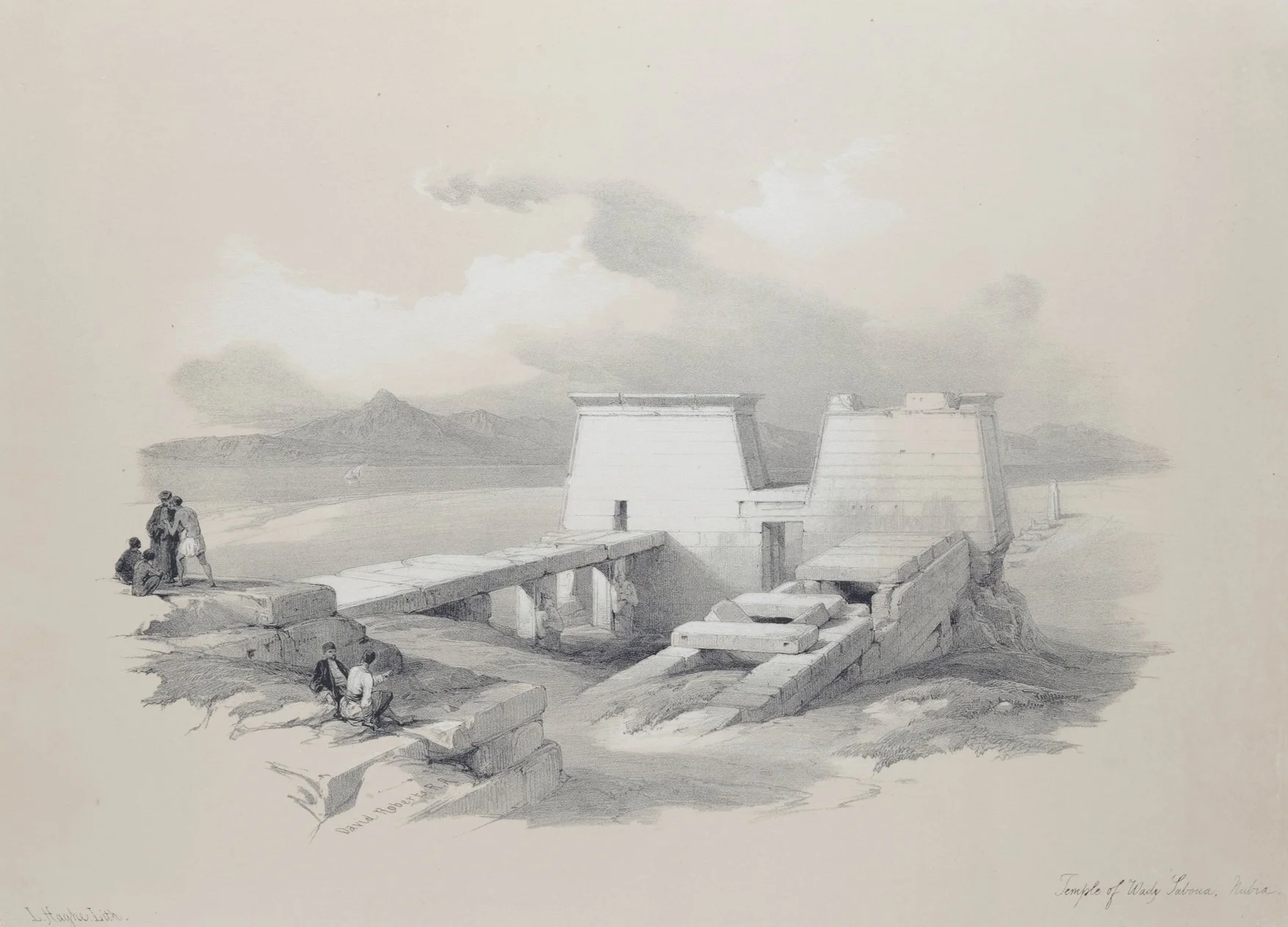 Image 2 of 4
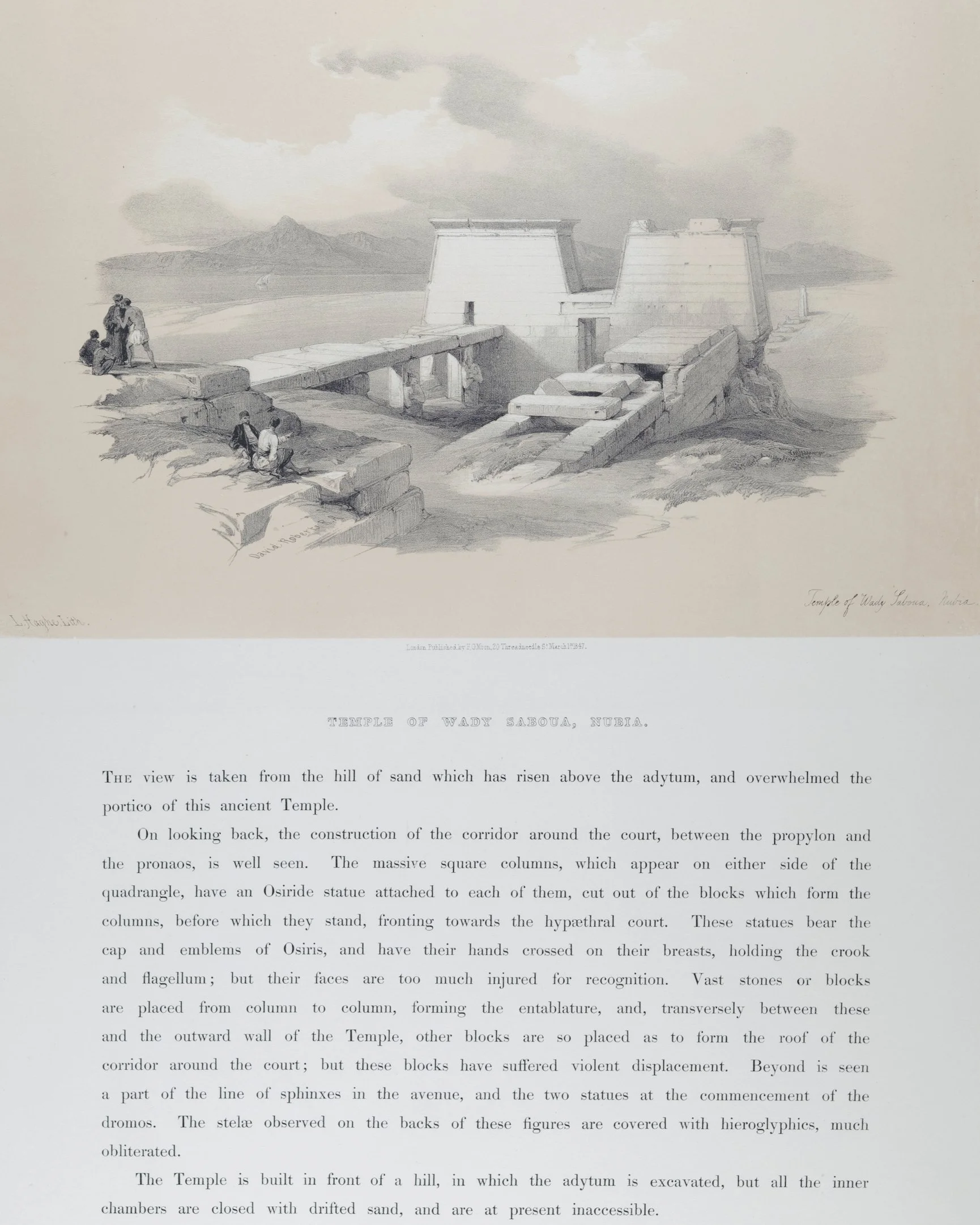 Image 3 of 4
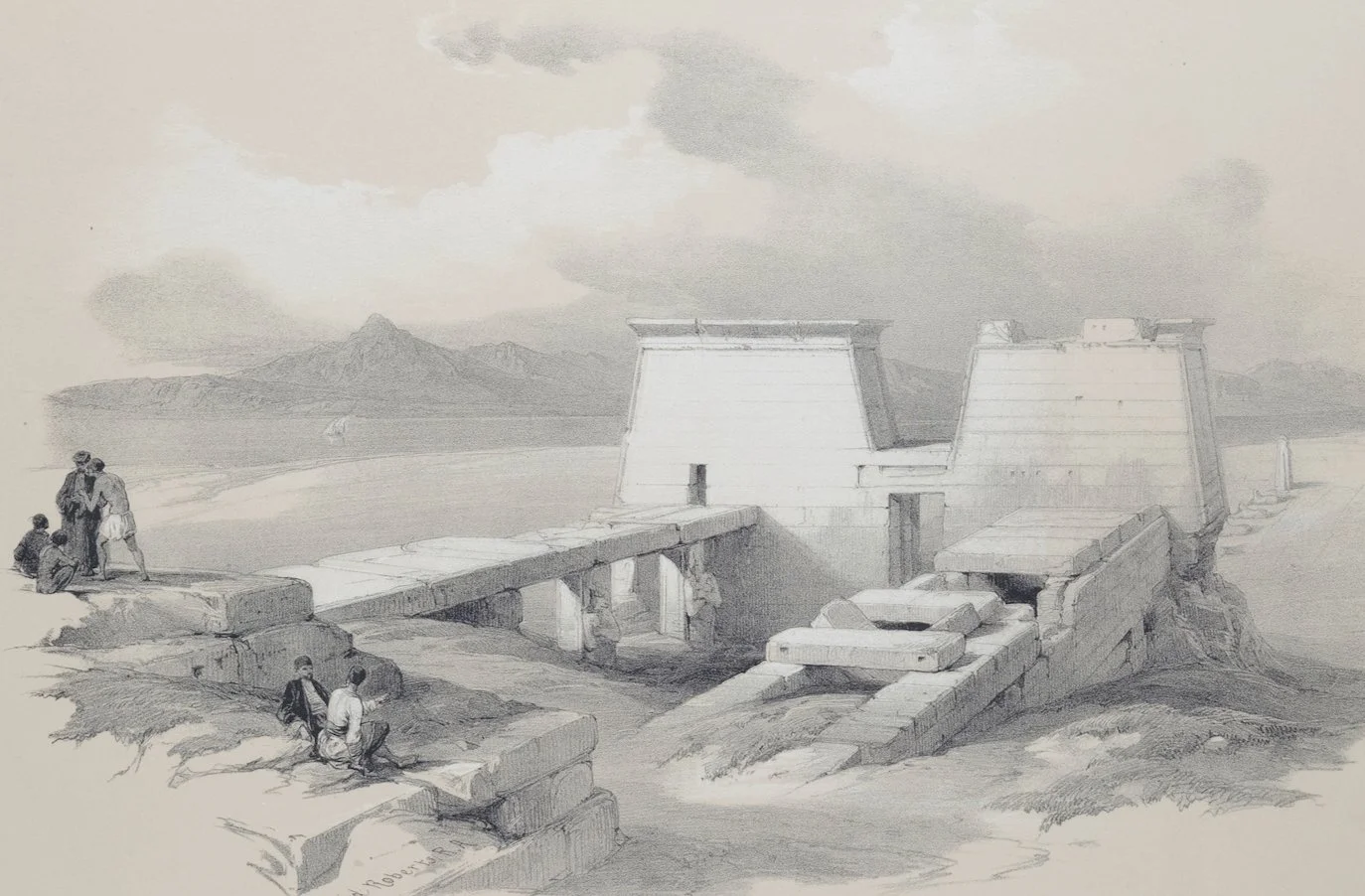 Image 4 of 4
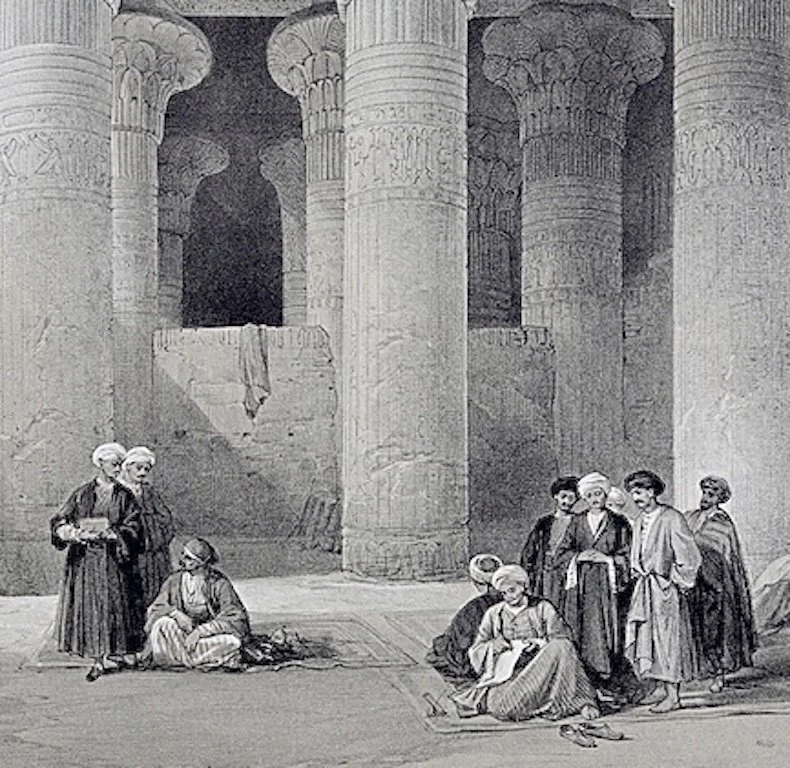
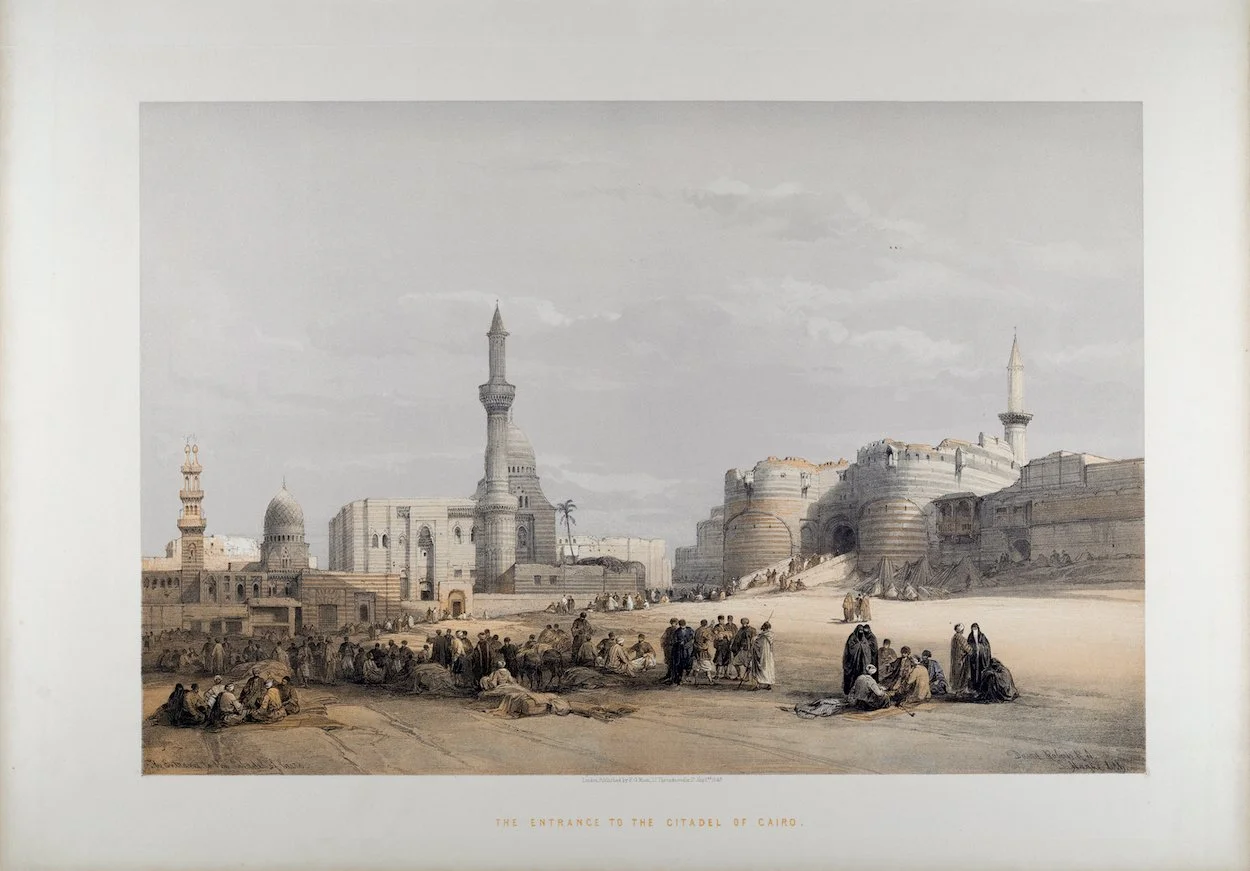
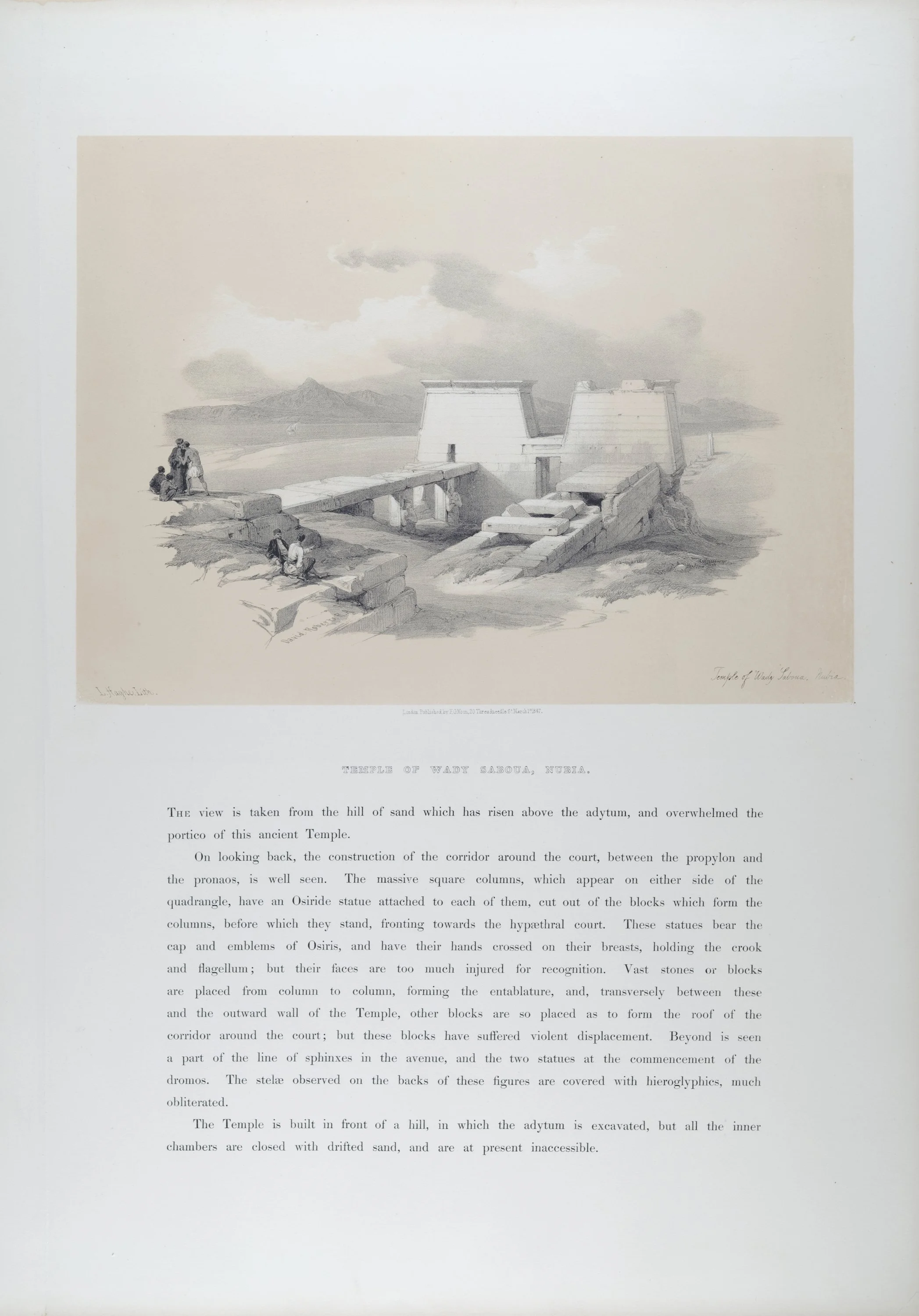
This lithograph depicts the ancient Nubian temple complex of Wady Saboua in southern Egypt, originally built during the New Kingdom period of ancient Egypt. It was built under Pharaoh Ramesses II of the 19th Dynasty (13th century BCE) and was dedicated to the gods Amun-Re and Re-Horakhty as well as Ramesses II himself in deified form. A group of Egyptian men are in conversation on the left and two more sit in the foreground. A felucca sails on a body of water in front of mountains in the distance.
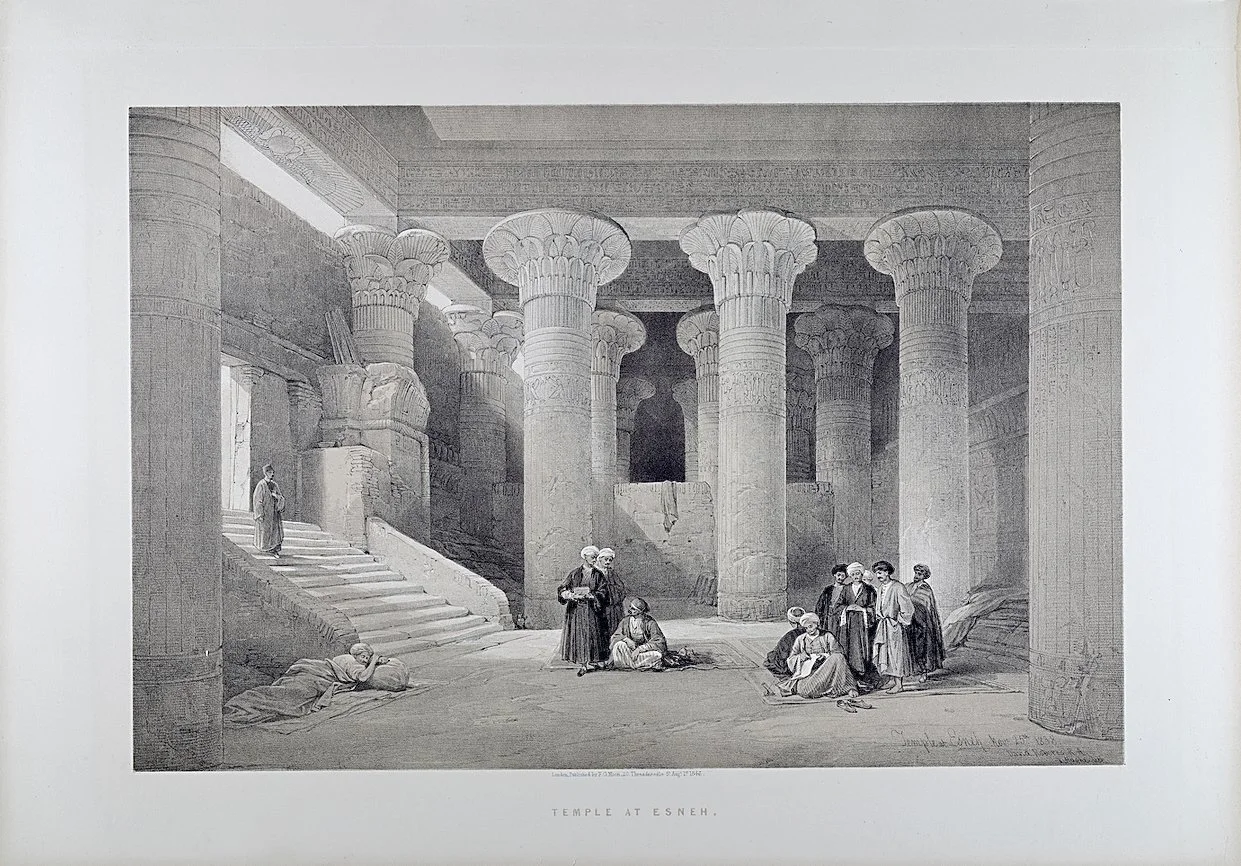
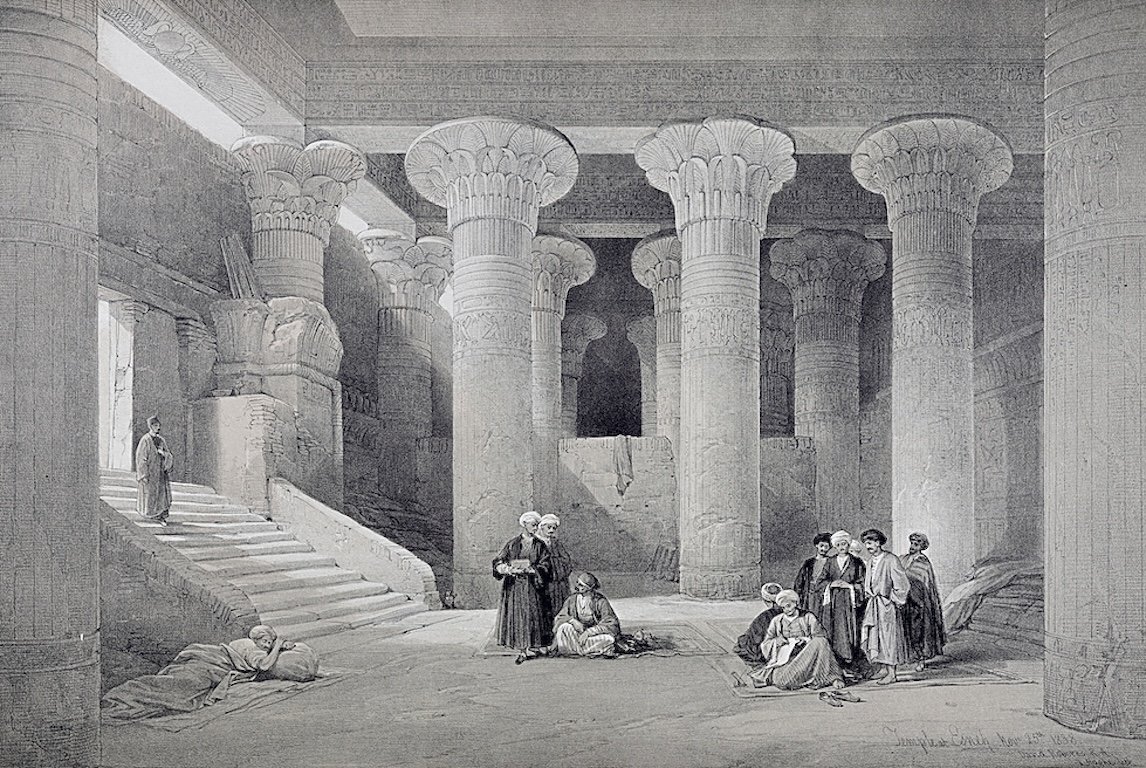
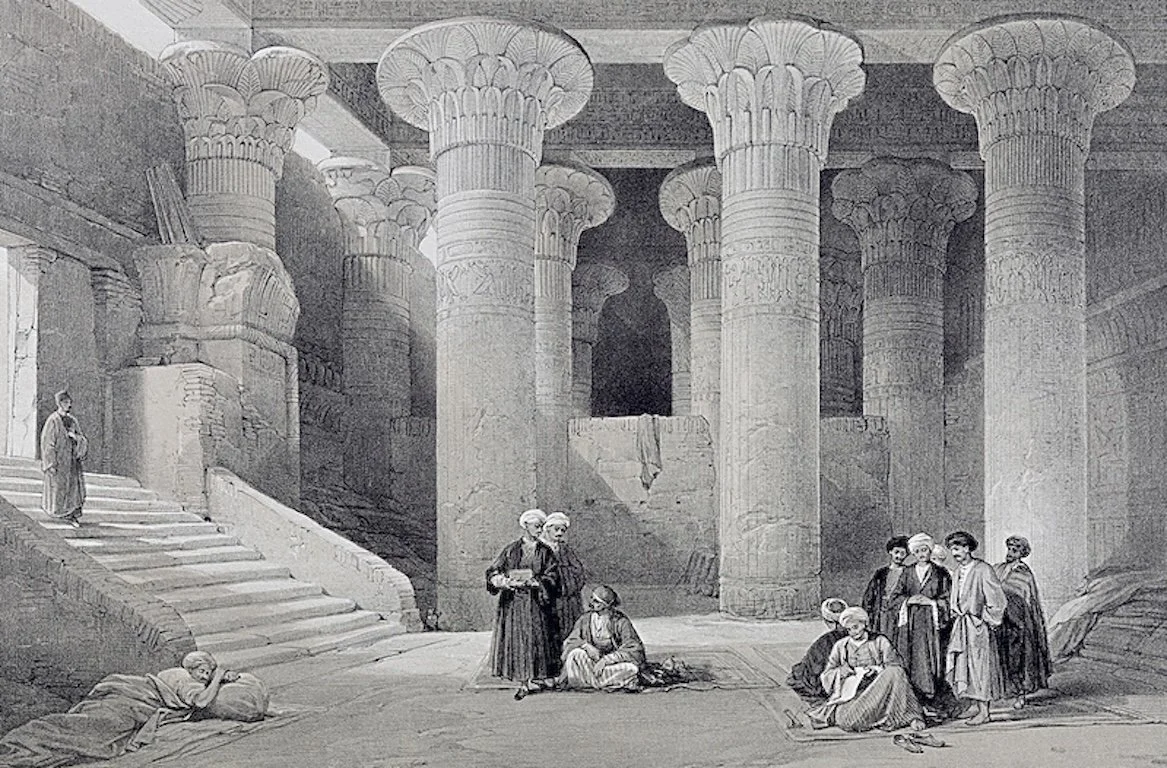
This duotone lithograph is printed in the upper half of a wove paper sheet with the text description in the lower portion and on the verso. The print is signed in plate in the lower left and titled in the lower right. The sheet has wide margins. The portion of the sheet which includes the image and its margin measures 14.5" high and 16.75" wide. Overall the sheet measures 23.88" high and 16.75" wide. There is minimal discoloration along the upper edge of the sheet on the left and a faint vertical crease in the left margin. All of this would not be visible behind a mat at framing. The image and text portions of the print are in excellent condition.
The drawings and watercolors from Roberts' tour of the Holy Land and Egypt were collated together into folios and released over a seven year period by the publisher F.G. Moon from 20 Threadneedle Street London. This lithograph is from the Royal Subscription Edition (1842-1849) with only 500 copies produced per depiction. Louis Haghe (the Belgian engraver and friend of Roberts) worked on all of the lithographs for this series.
David Roberts (1796-1864) was born outside of Edinburgh, Scotland. At age 10 he became a house painter’s apprentice. He continued painting houses and eventually theater scenes in Edinburgh and then in London. His friend, J. M. W. Turner, recognized his artistic talent and encouraged him to become a full-time artist.
In 1839 Roberts traveled to Egypt and then in 1840, through the Holy Land, concluding in Jerusalem. Upon his return to England, F. G. Moon agreed to publish lithographs created by Louis Haghe from Robert’s sketches and watercolors. This publication was highly acclaimed and very popular for its esthetic quality, its historical and topographical accuracy, and Robert’s dramatic depiction of his scenes. Queen Victoria and Charles Dickens were among the subscribers who collected his works. Roberts' and Haghe’s duotone lithographs, often colored, remain extremely sought-after today and have been rising steadily in value.