 Image 1 of 4
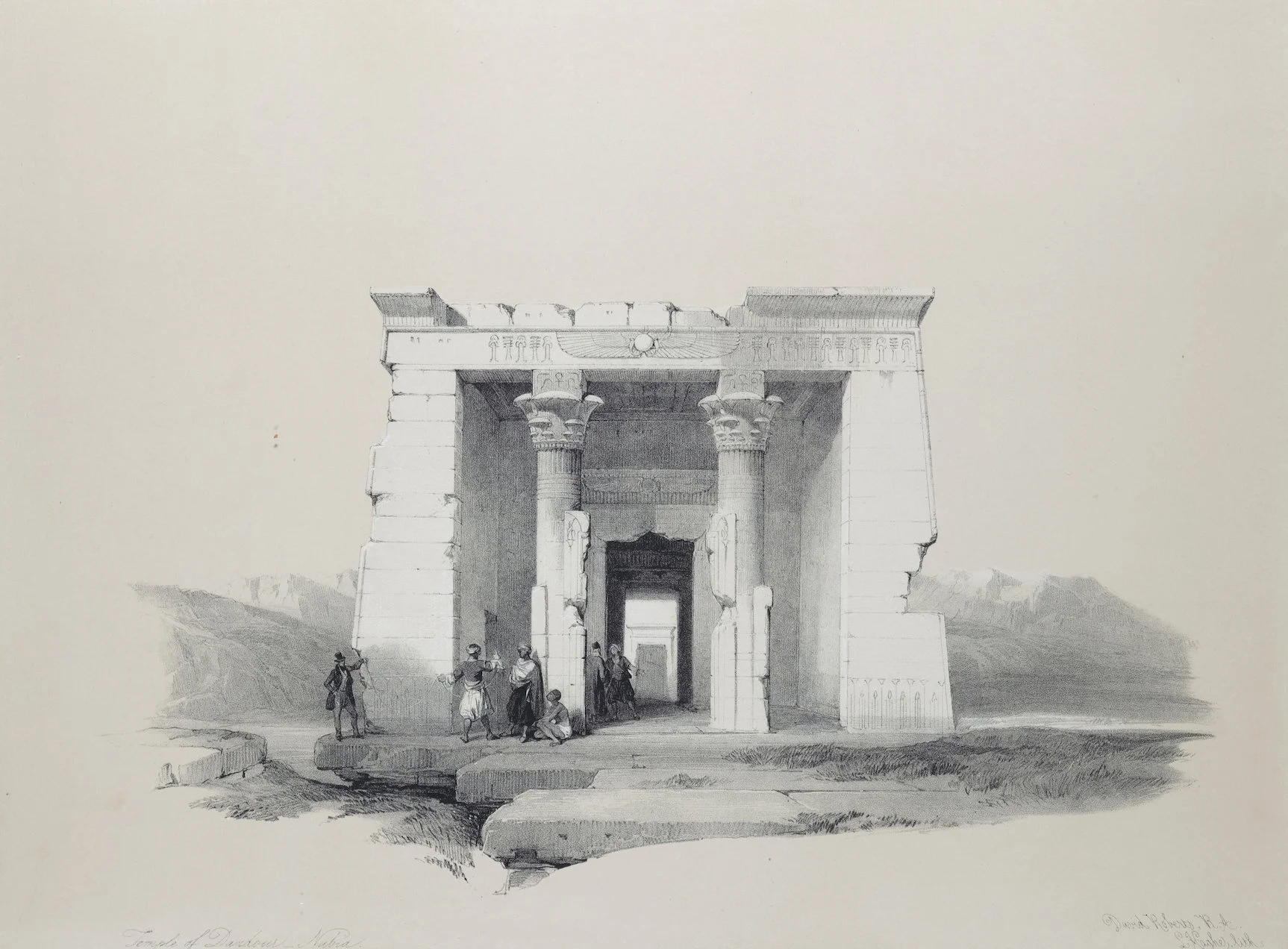 Image 2 of 4
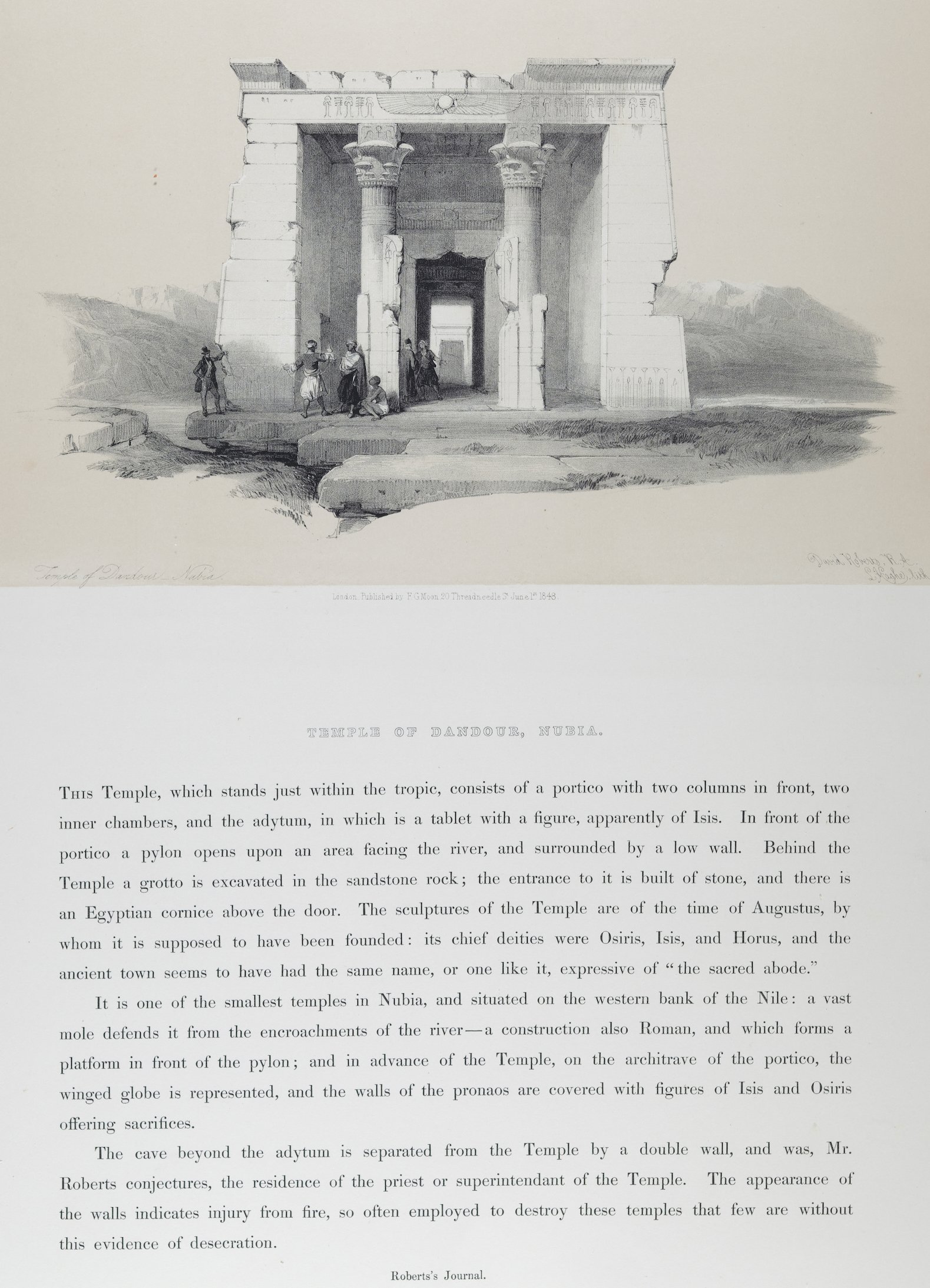 Image 3 of 4
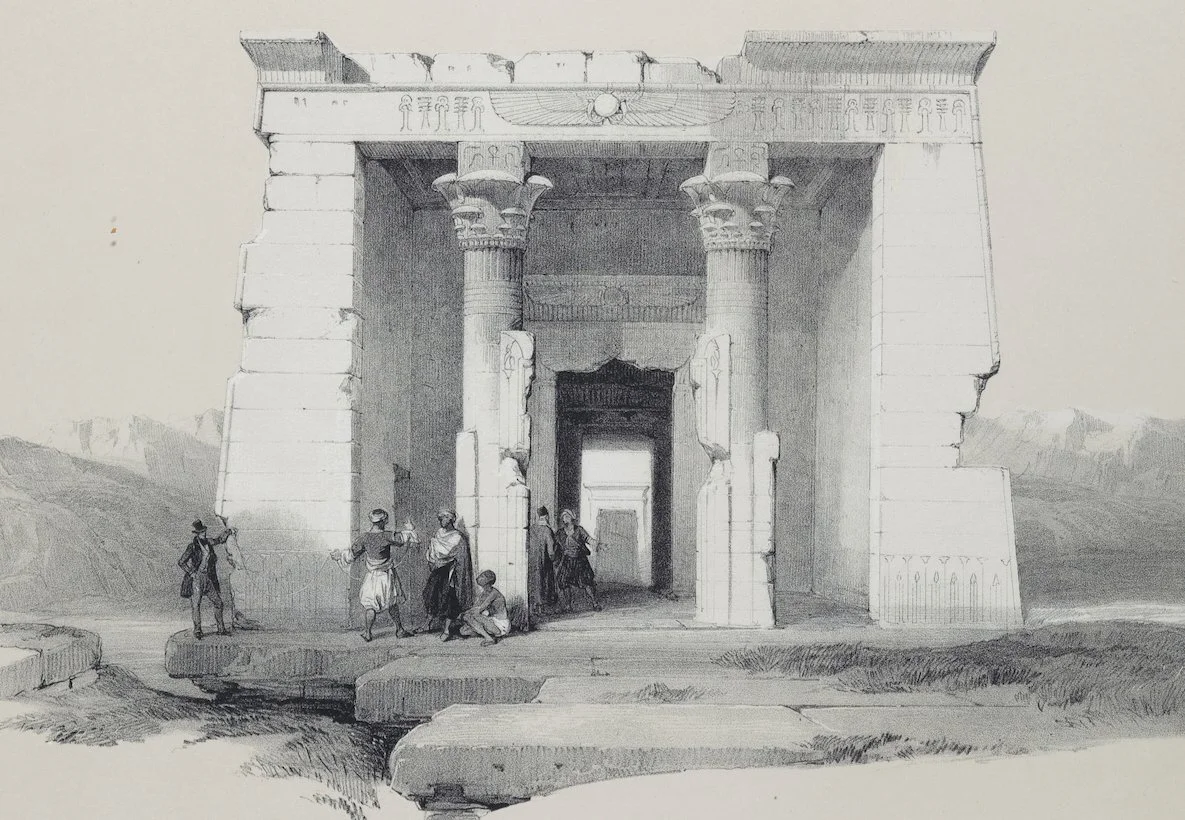 Image 4 of 4
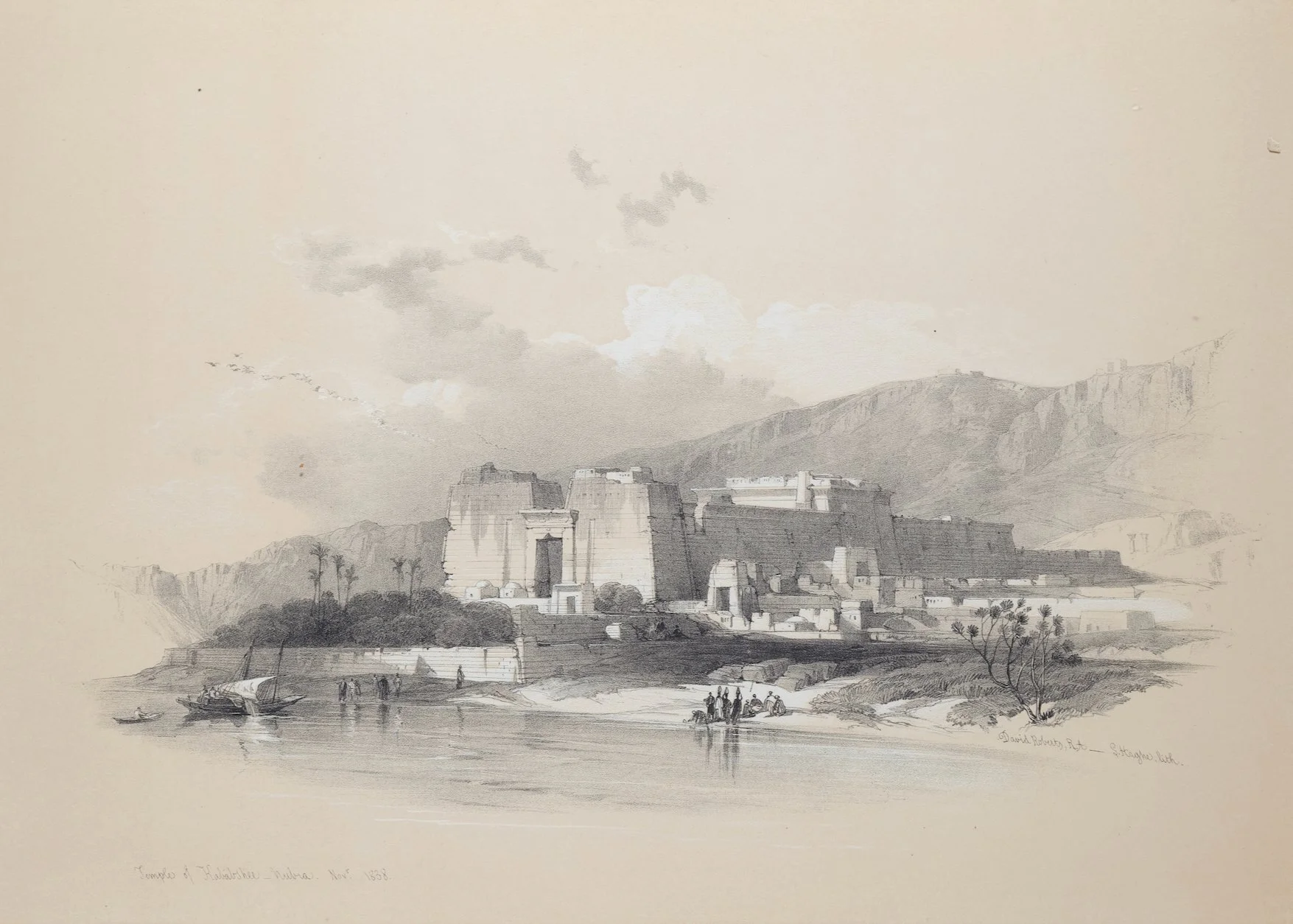
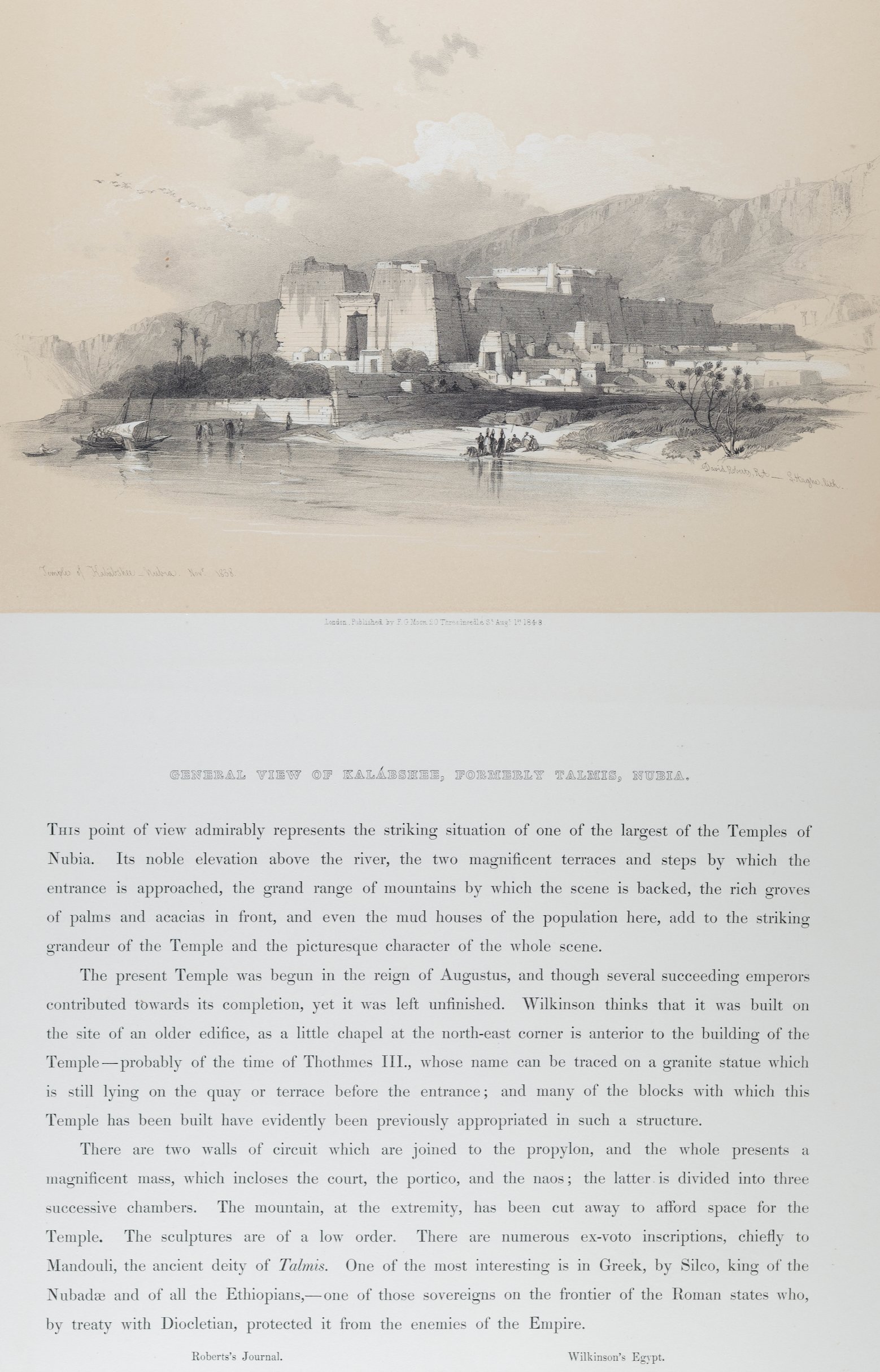
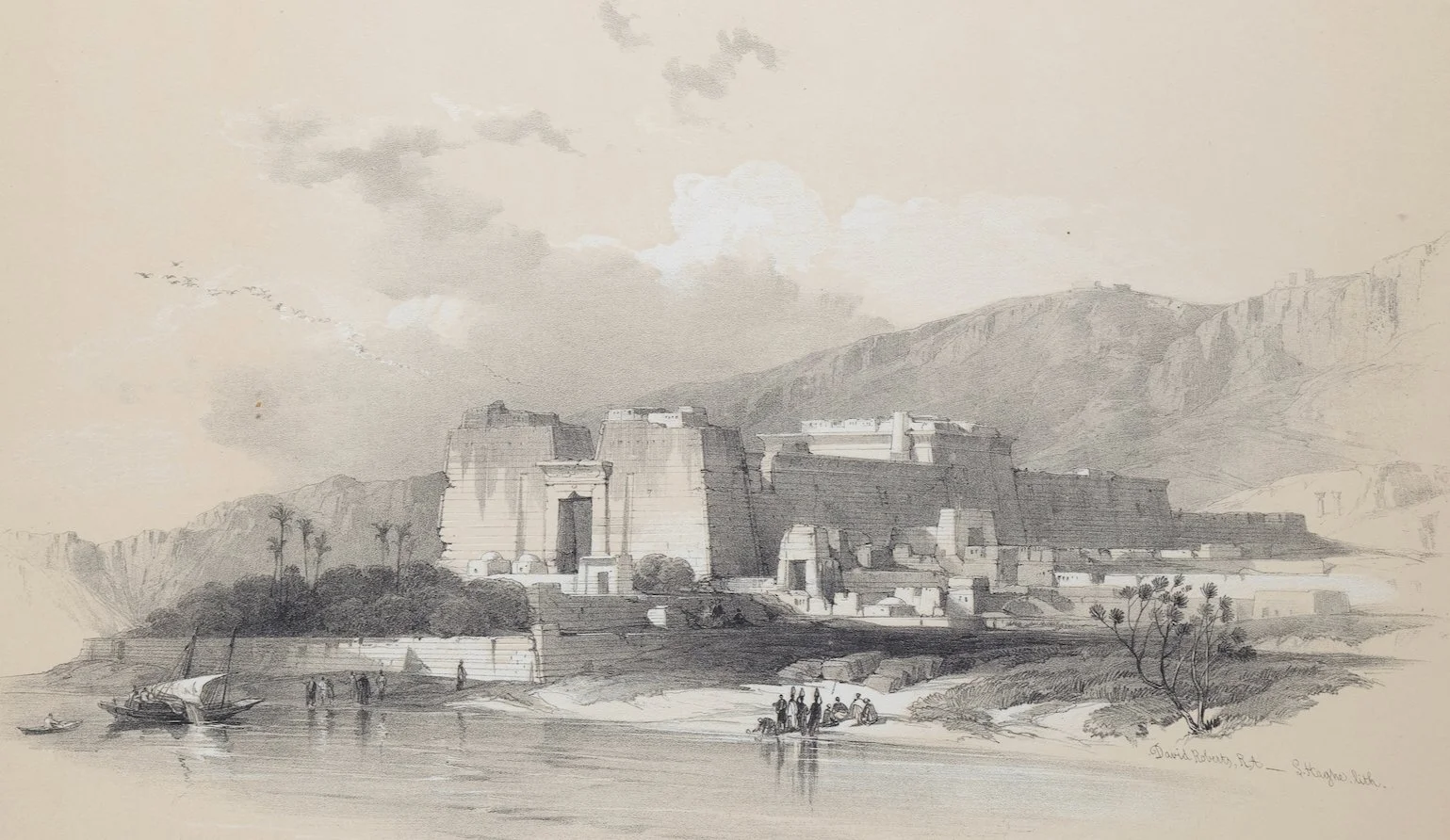
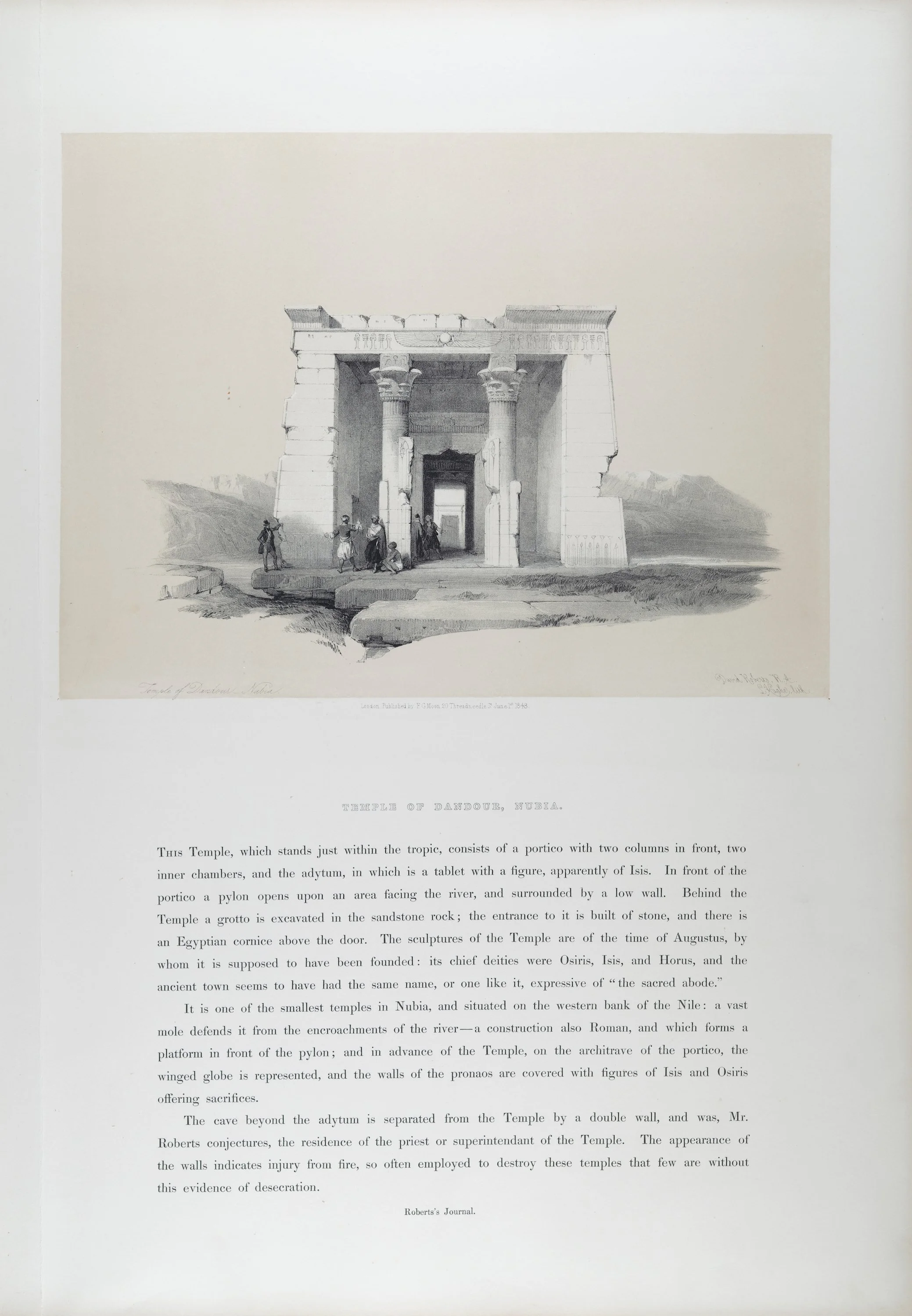
This lithograph depicts the Temple of Dendour (Dandur), one of the most elegant and historically layered Nubian temples, which is small in scale but rich in symbolism and story. It was located on the west bank of the Nile, south of Aswan, but now sits in The Metropolitan Museum of Art, New York. When the Aswan High Dam threatened to flood Nubia in the 1960s the temple was dismantled block by block and gifted by Egypt to the United States in 1965 in gratitude for help saving Nubian monuments. It was reassembled inside the Metropolitan Museum’s Sackler Wing, with a reflecting pool and sloped floor to evoke the Nile setting. It was constructed by the Roman Emperor Augustus in 15 BCE and was dedicated to Isis (the great mother goddess, goddess of magic, motherhood, and fertility, revered as the ideal mother and wife, as well as the protector of the dead and the goddess of rebirth. As the wife of Osiris and mother of Horus, her name means "throne," and she is depicted as a powerful sorceress who resurrected her husband and protected Egypt's pharaohs). It is also dedicated to Osiris (Lord of the Underworld, Judge of the Dead, and god of fertility, resurrection, and agriculture) and two deified Nubian brothers, Pedesi and Pihor, believed to have drowned in the Nile, who were worshipped as local protective gods.
Roberts' lithograph depicts the rectangular temple with its gently battered walls and simple entrance, with low relief carvings just visible on the façade. Two groups of Egyptian men are gathered in and in front of the temple. A man dressed in western, presumably European clothing, observes the scene from the left edge of the structure.
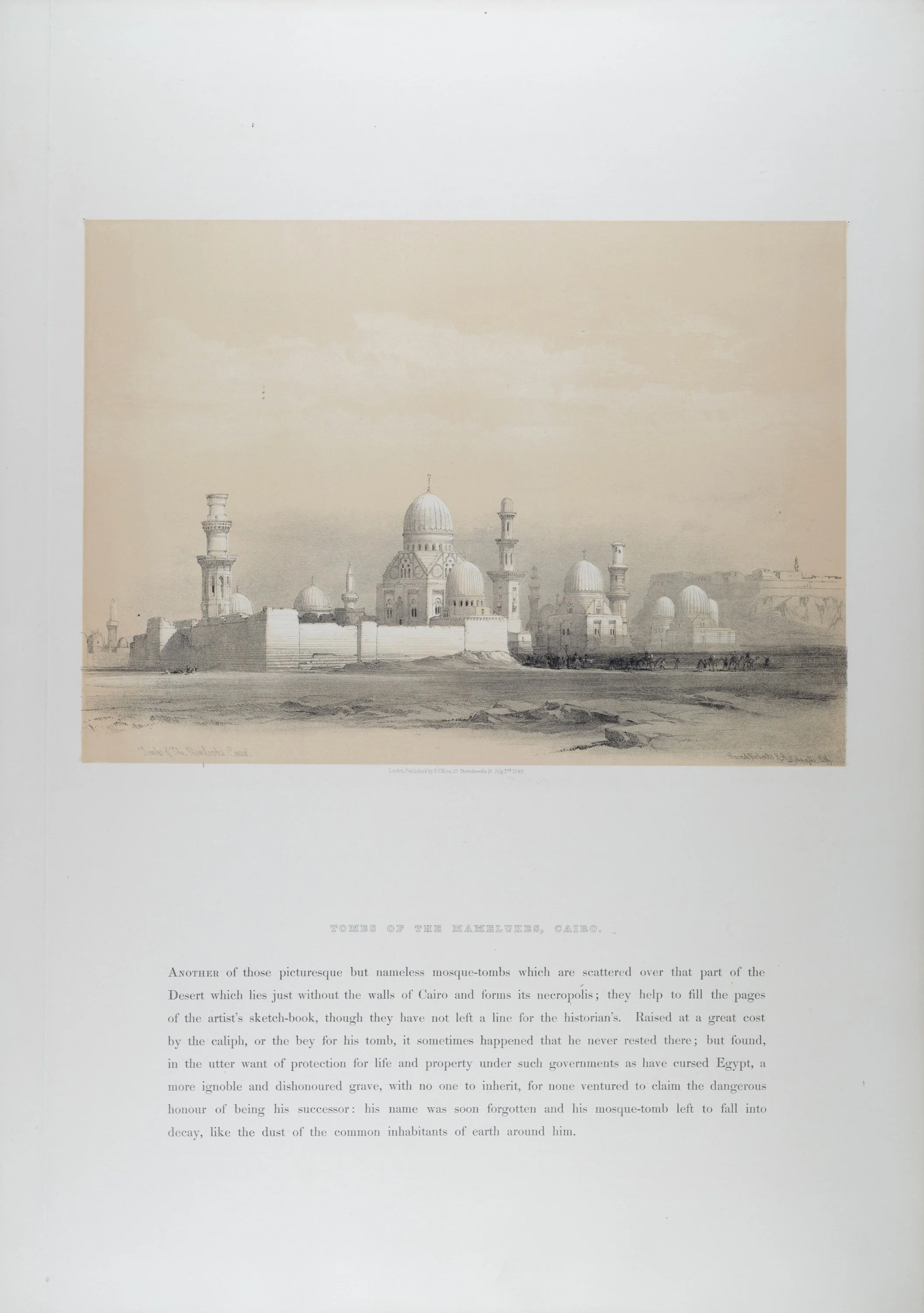
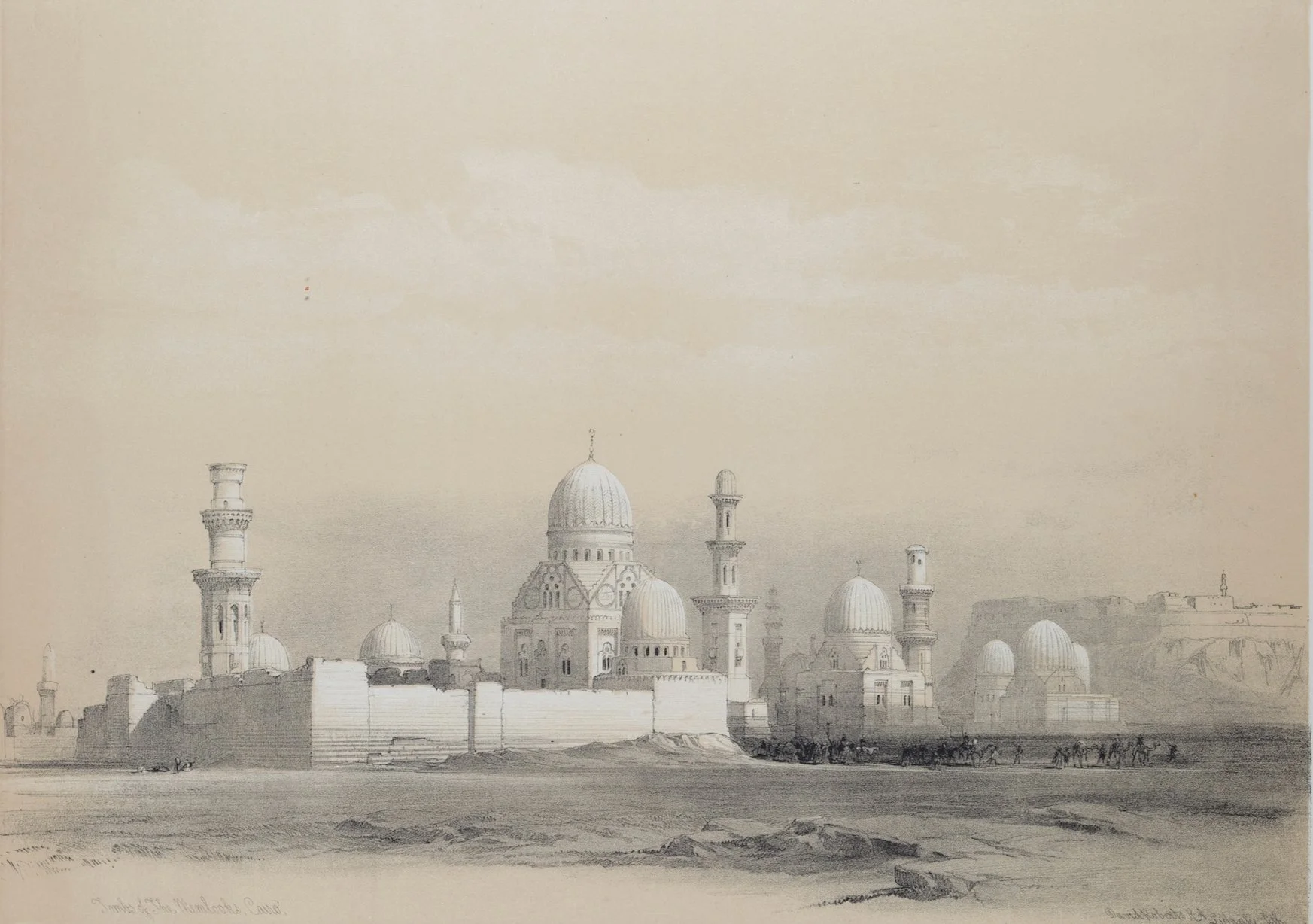
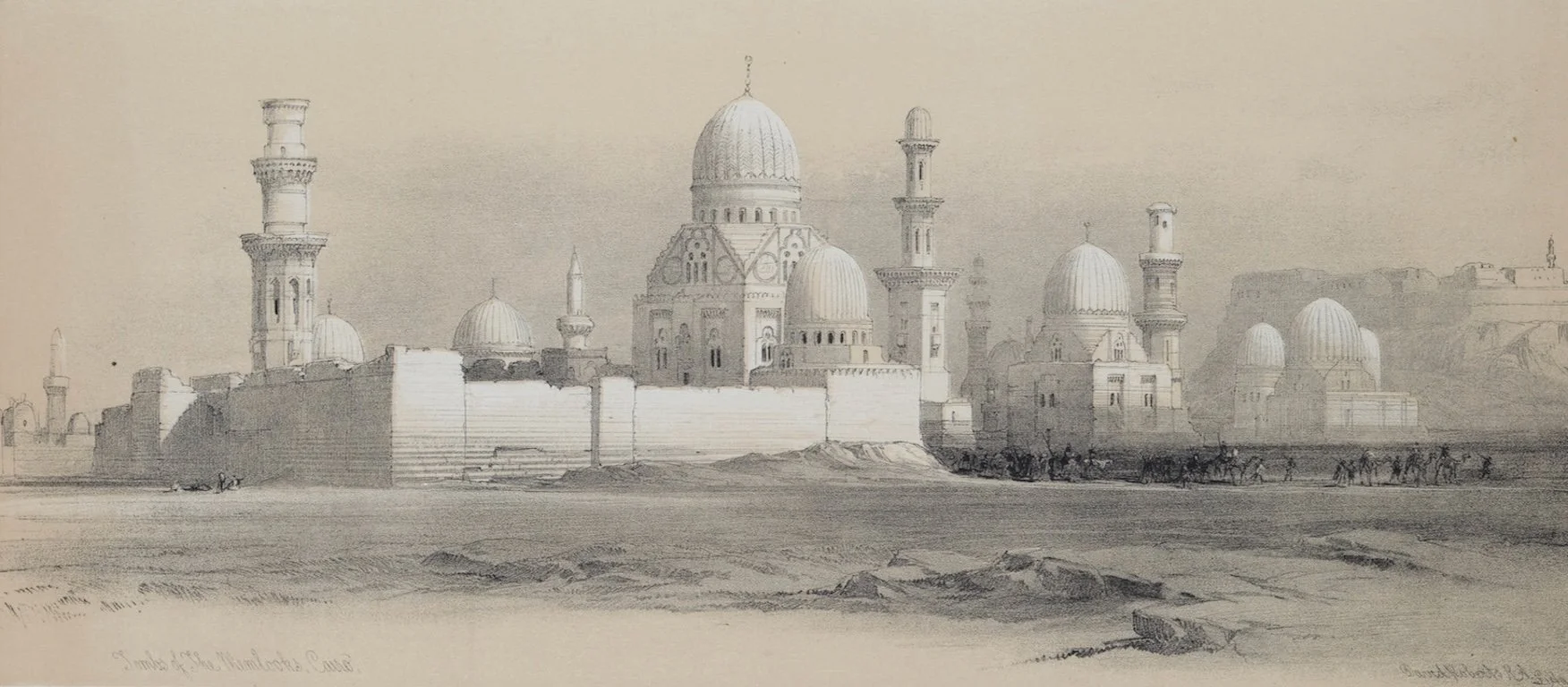
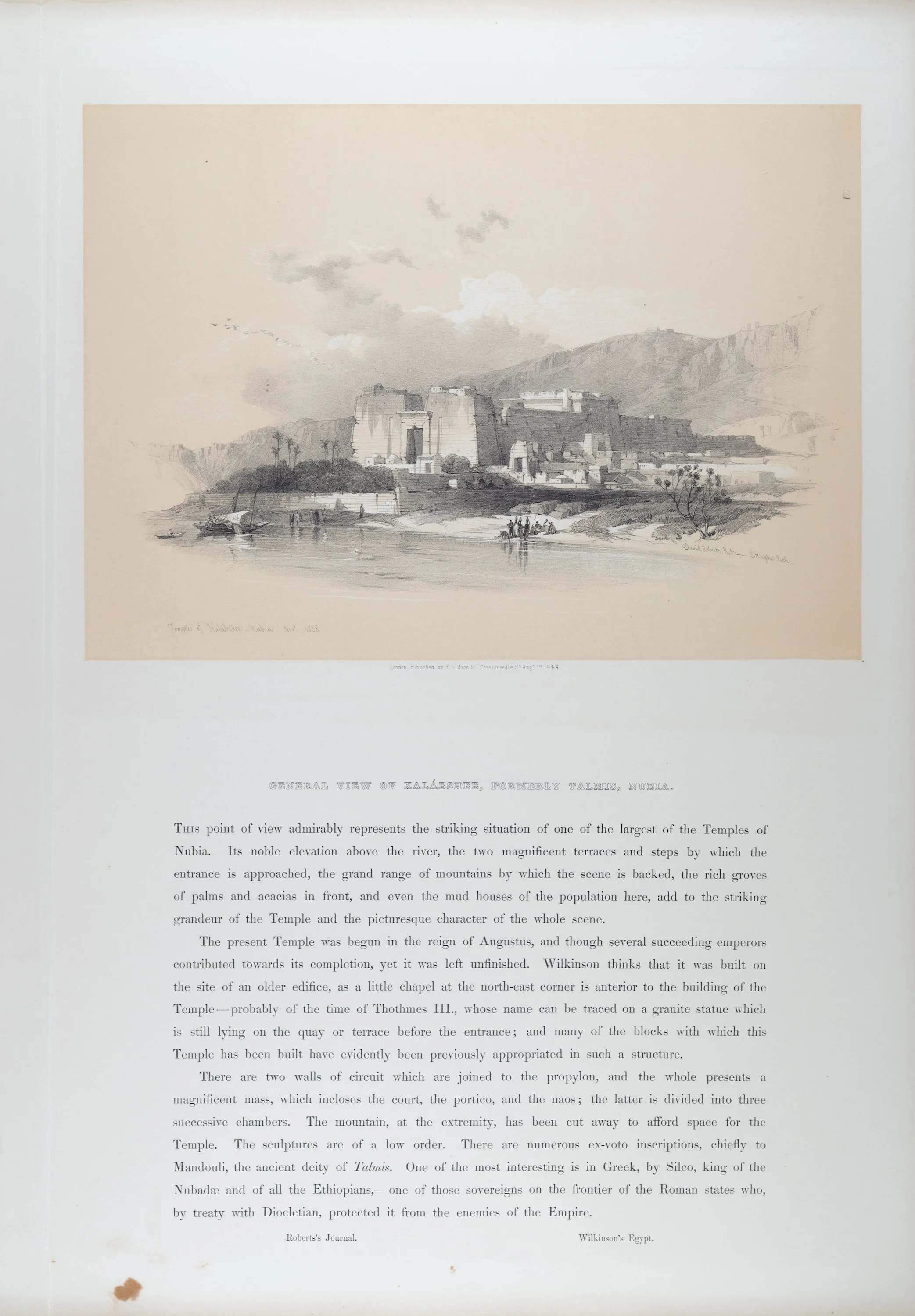
This duotone lithograph is printed in the upper half of a wove paper sheet with the text description in the lower portion and on the verso. The print is signed in plate in the lower right and titled in the lower left. The sheet has wide margins. The portion of the sheet which includes the image and its margin measures 15" high and 16.75" wide. Overall the sheet measures 23.88" high and 16.75" wide. There is a faint vertical crease in the left margin which would not be visible behind a mat at framing. The image and text portions of the print are in excellent condition.
The drawings and watercolors from Roberts' tour of the Holy Land and Egypt were collated together into folios and released over a seven year period by the publisher F.G. Moon from 20 Threadneedle Street London. This lithograph is from the Royal Subscription Edition (1842-1849) with only 500 copies produced per depiction. Louis Haghe (the Belgian engraver and friend of Roberts) worked on all of the lithographs for this series.
David Roberts (1796-1864) was born outside of Edinburgh, Scotland. At age 10 he became a house painter’s apprentice. He continued painting houses and eventually theater scenes in Edinburgh and then in London. His friend, J. M. W. Turner, recognized his artistic talent and encouraged him to become a full-time artist.
In 1839 Roberts traveled to Egypt and then in 1840, through the Holy Land, concluding in Jerusalem. Upon his return to England, F. G. Moon agreed to publish lithographs created by Louis Haghe from Robert’s sketches and watercolors. This publication was highly acclaimed and very popular for its esthetic quality, its historical and topographical accuracy, and Robert’s dramatic depiction of his scenes. Queen Victoria and Charles Dickens were among the subscribers who collected his works. Roberts' and Haghe’s duotone lithographs, often colored, remain extremely sought-after today and have been rising steadily in value.