 Image 1 of 4
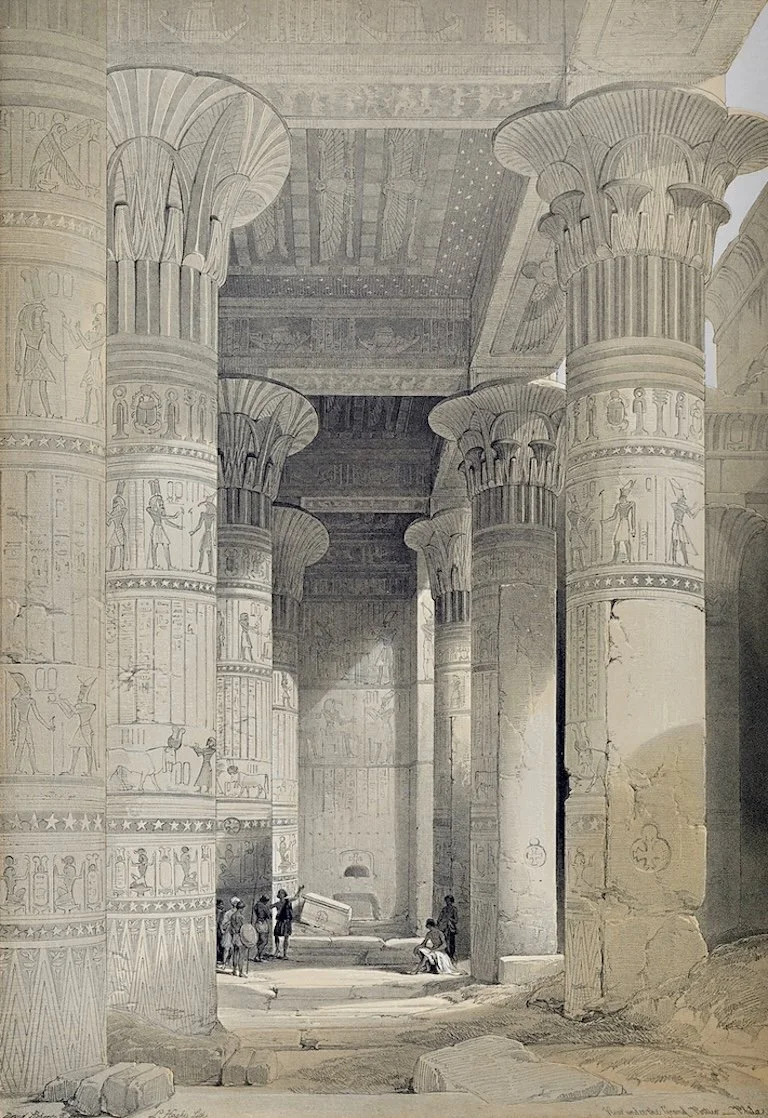 Image 2 of 4
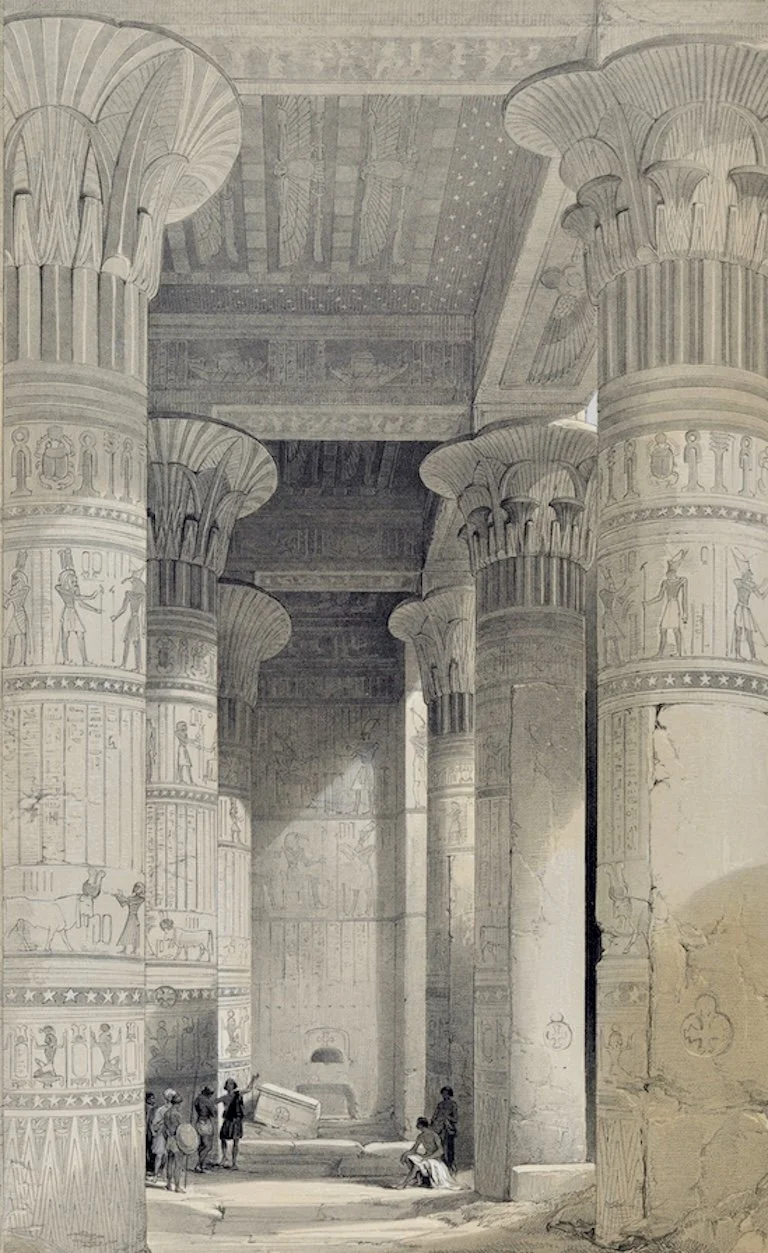 Image 3 of 4
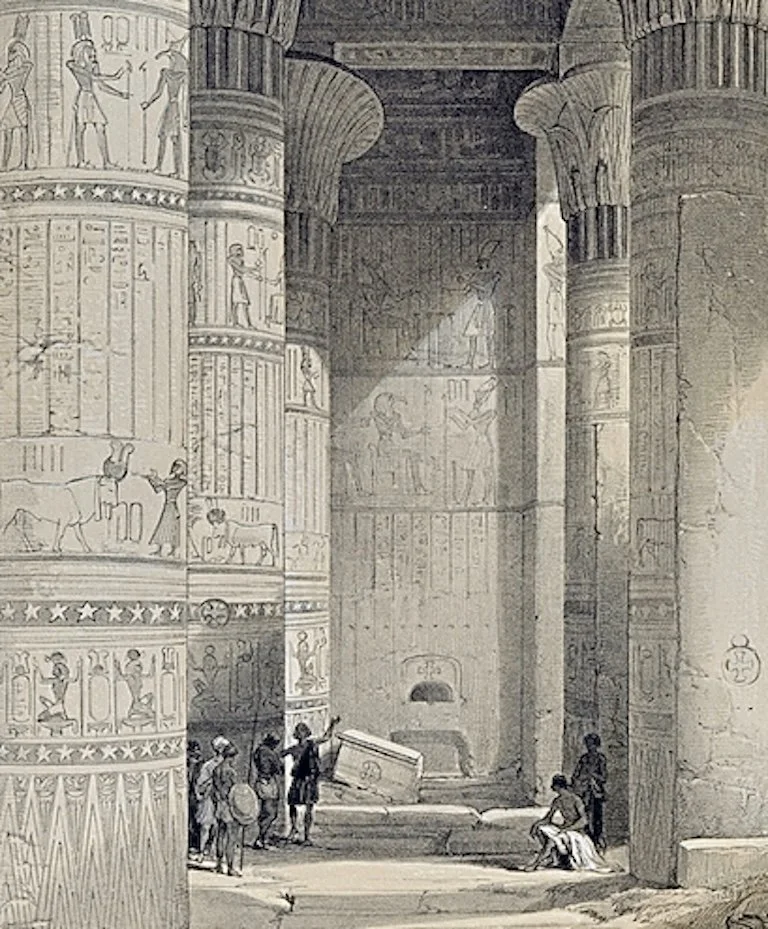 Image 4 of 4
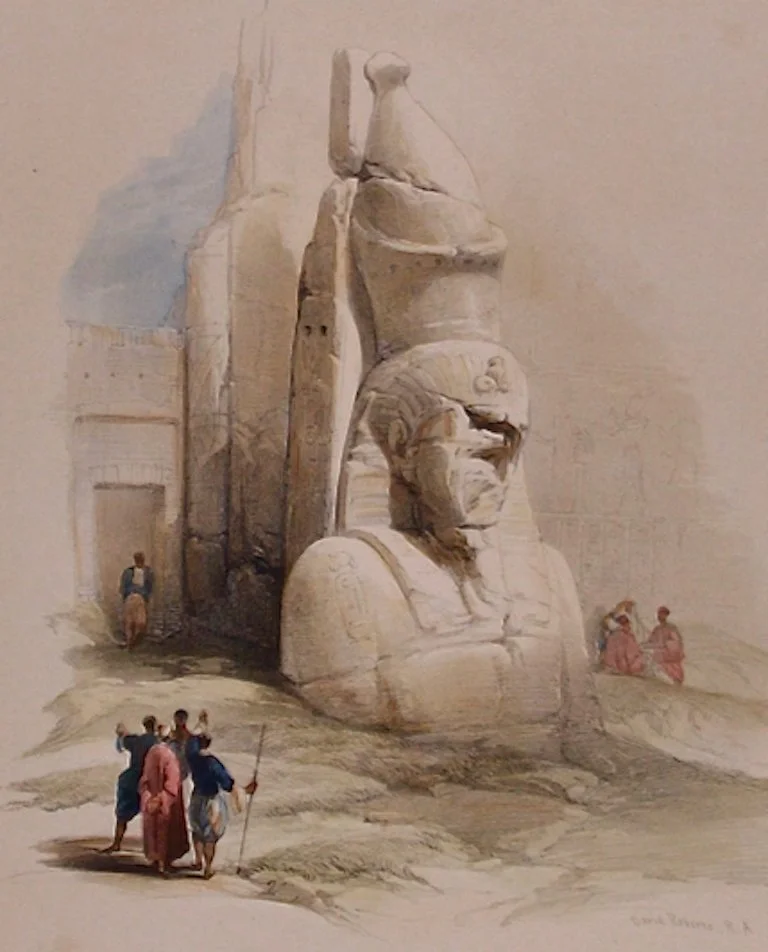
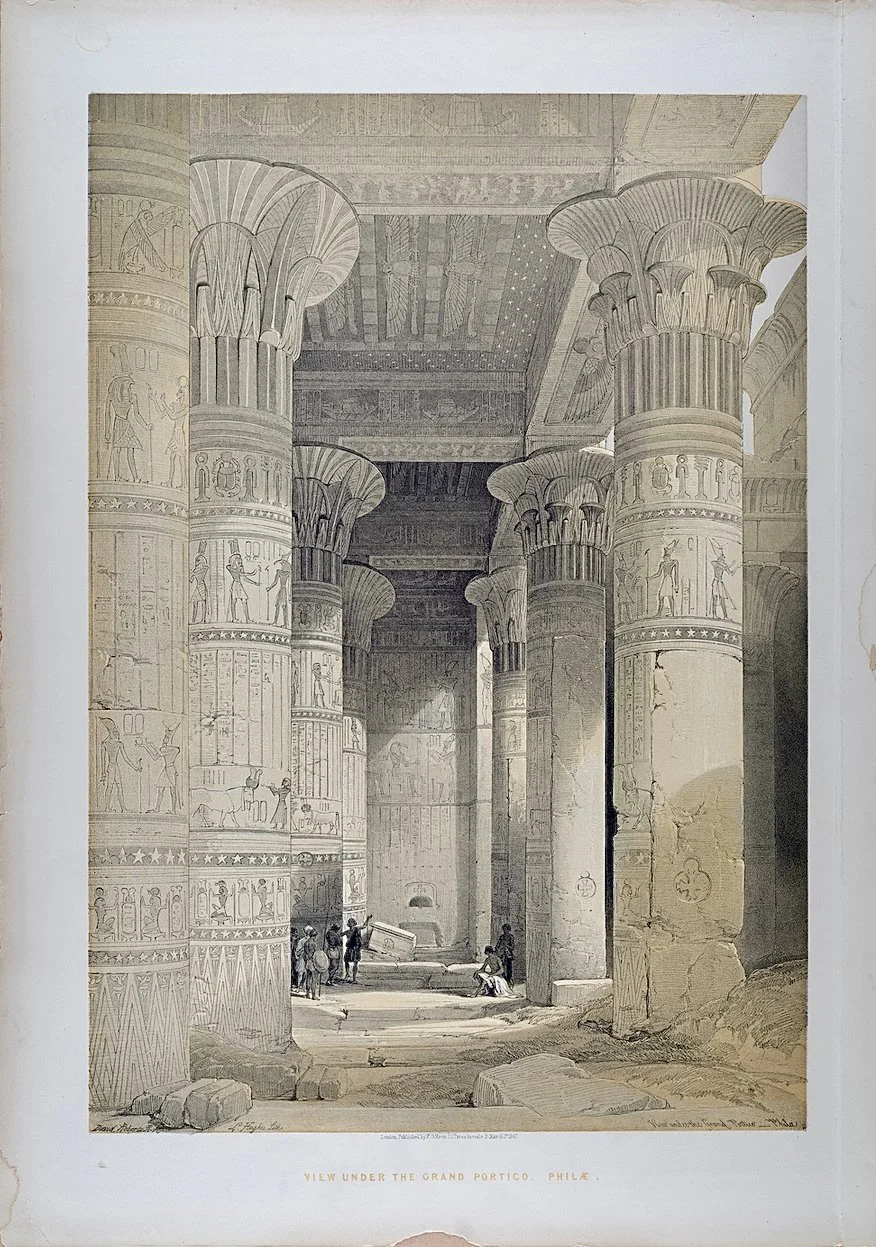
In this dramatic lithograph, Roberts positions the viewer beneath the massive stone columns of the temple’s grand portico. The heavy vertical shafts create a powerful sense of monumentality and contrast. The columns are rendered with detailed carvings and hieroglyphs, emphasizing the age and texture of the stone. Egyptian men in traditional dress are seen deep within the structure amid the towering pylons and ruins of the temple complex. providing scale, underscoring the grandeur of the ancient structure.
Philae is an island in the Nile River in southern Egypt, near Aswan. In antiquity, it was one of the most important religious centers of ancient Egypt. The island is especially associated with the worship of the goddess Isis. Its main structure, the Temple of Isis, was built primarily during the Ptolemaic period (3rd–1st centuries BCE), with later additions under Roman rule.
Philae holds historical and cultural significance for several reasons: It was a major pilgrimage site dedicated to Isis, whose cult spread widely across the Mediterranean world during the Hellenistic and Roman periods. Philae was also one of the last active centers of ancient Egyptian religion. Pagan worship reportedly continued there into the 6th century CE, long after Christianity had spread through Egypt.
In the 20th century, rising waters from the Aswan Low Dam and later the Aswan High Dam threatened to submerge the site. Between 1972 and 1980, UNESCO led an international effort to dismantle and relocate the temple complex to nearby Agilkia Island, preserving it for future generations.
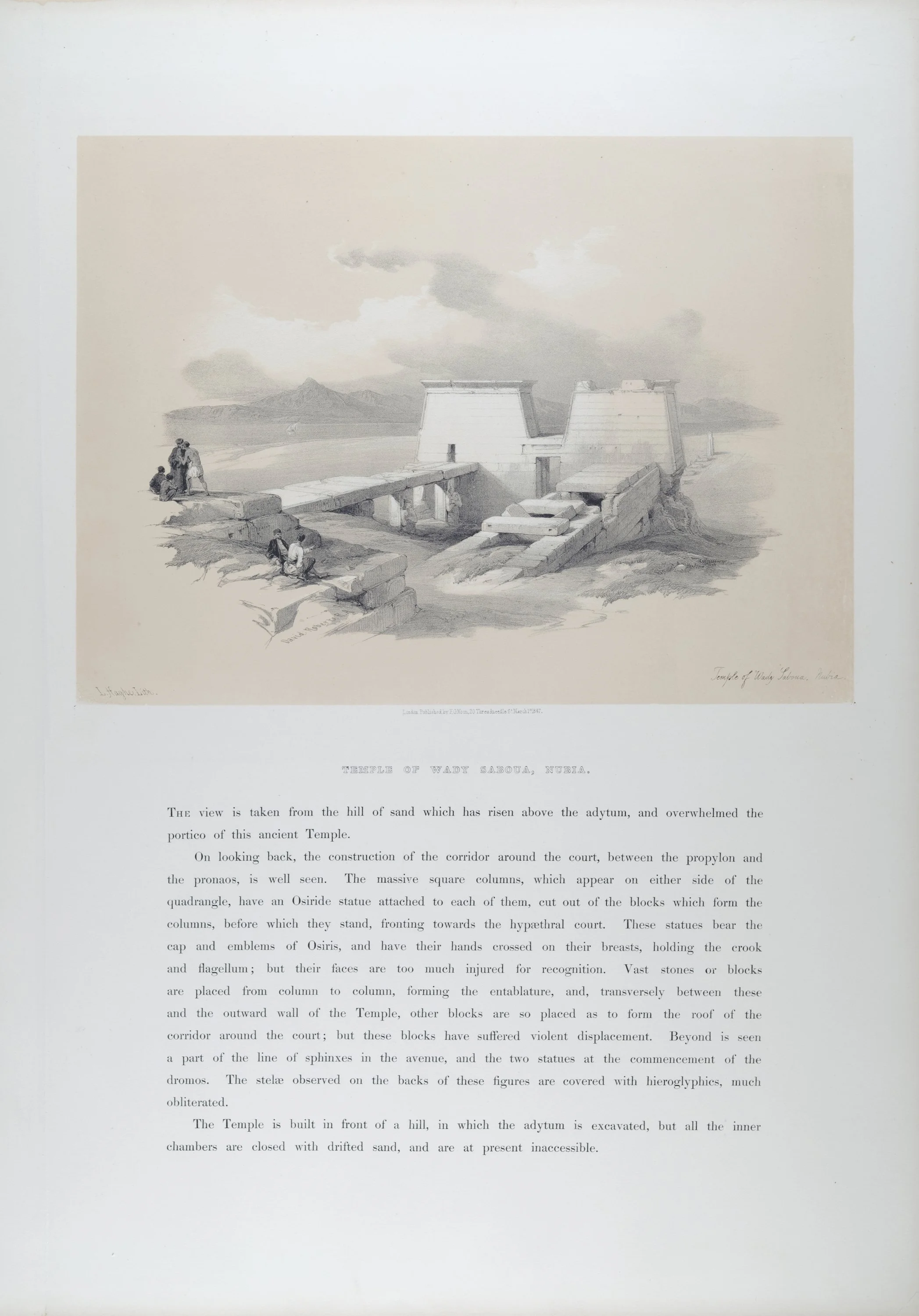
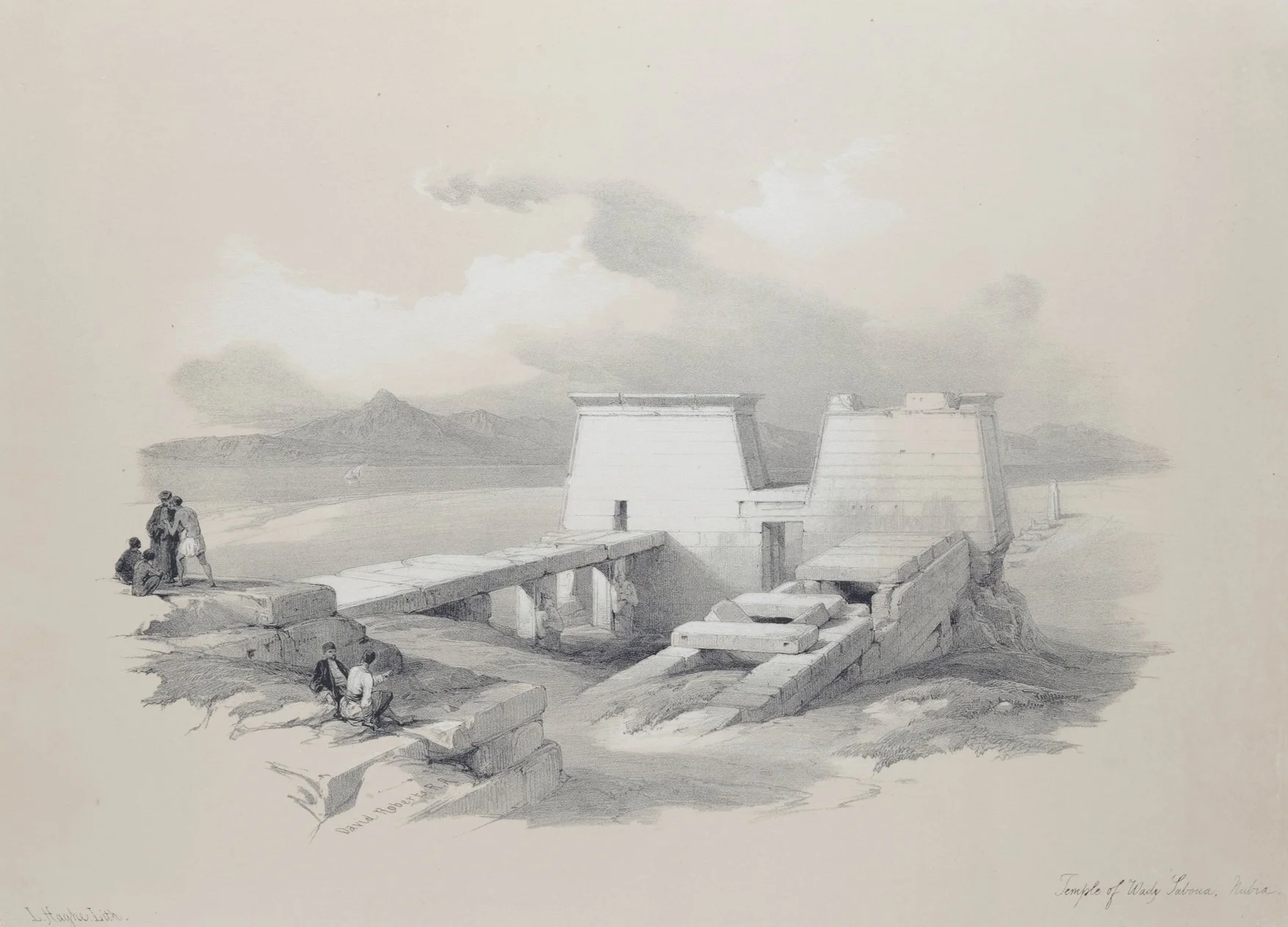
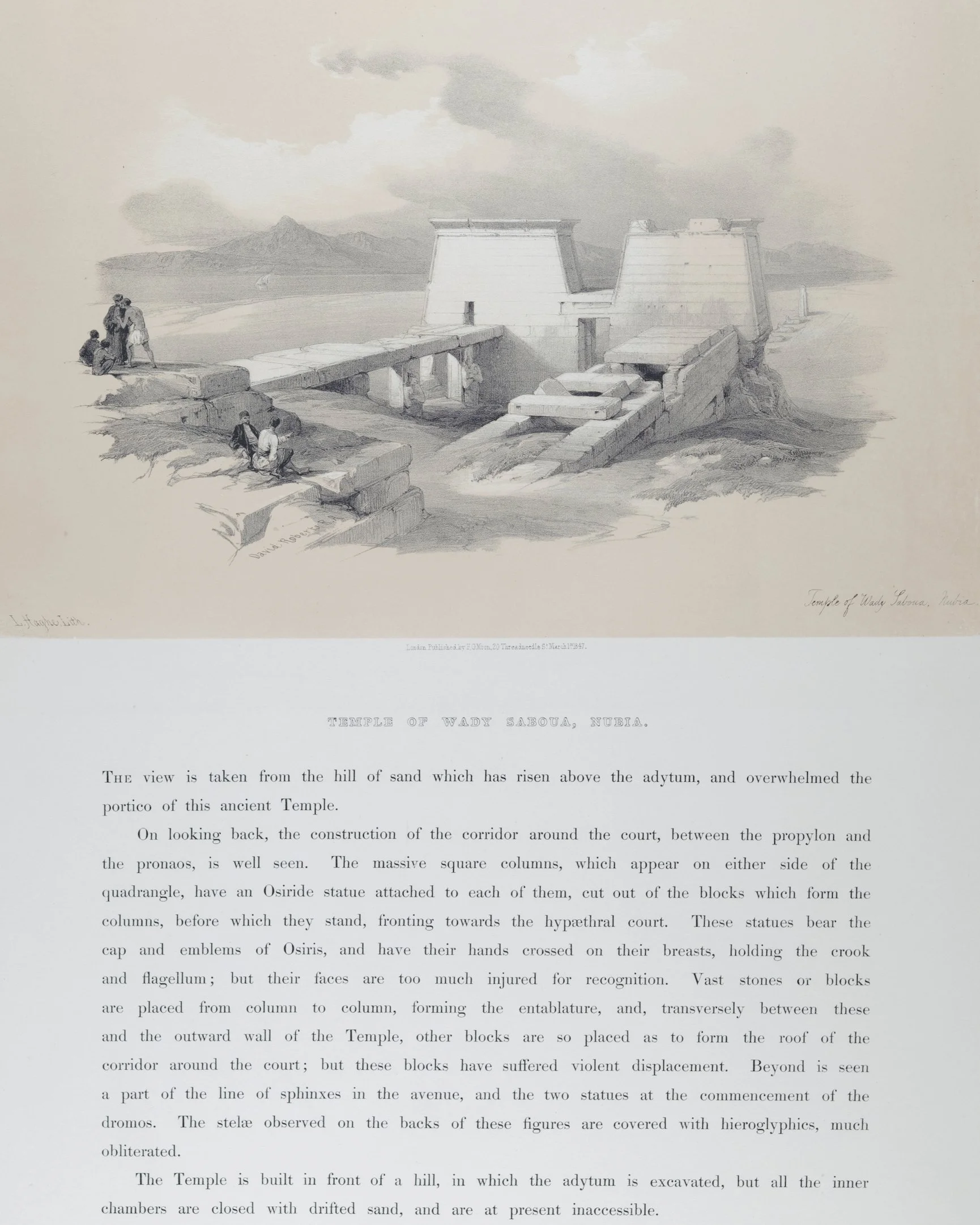
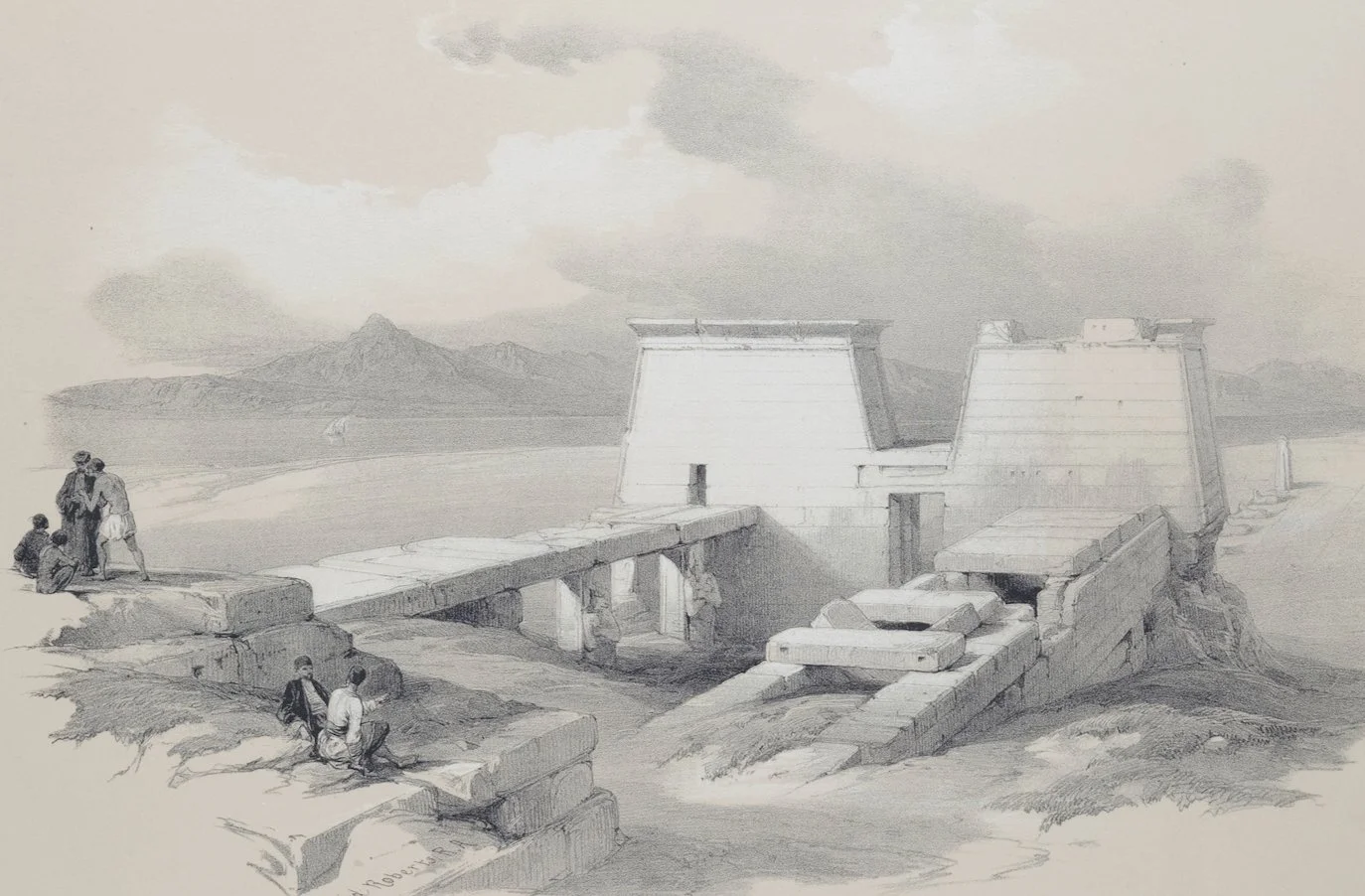
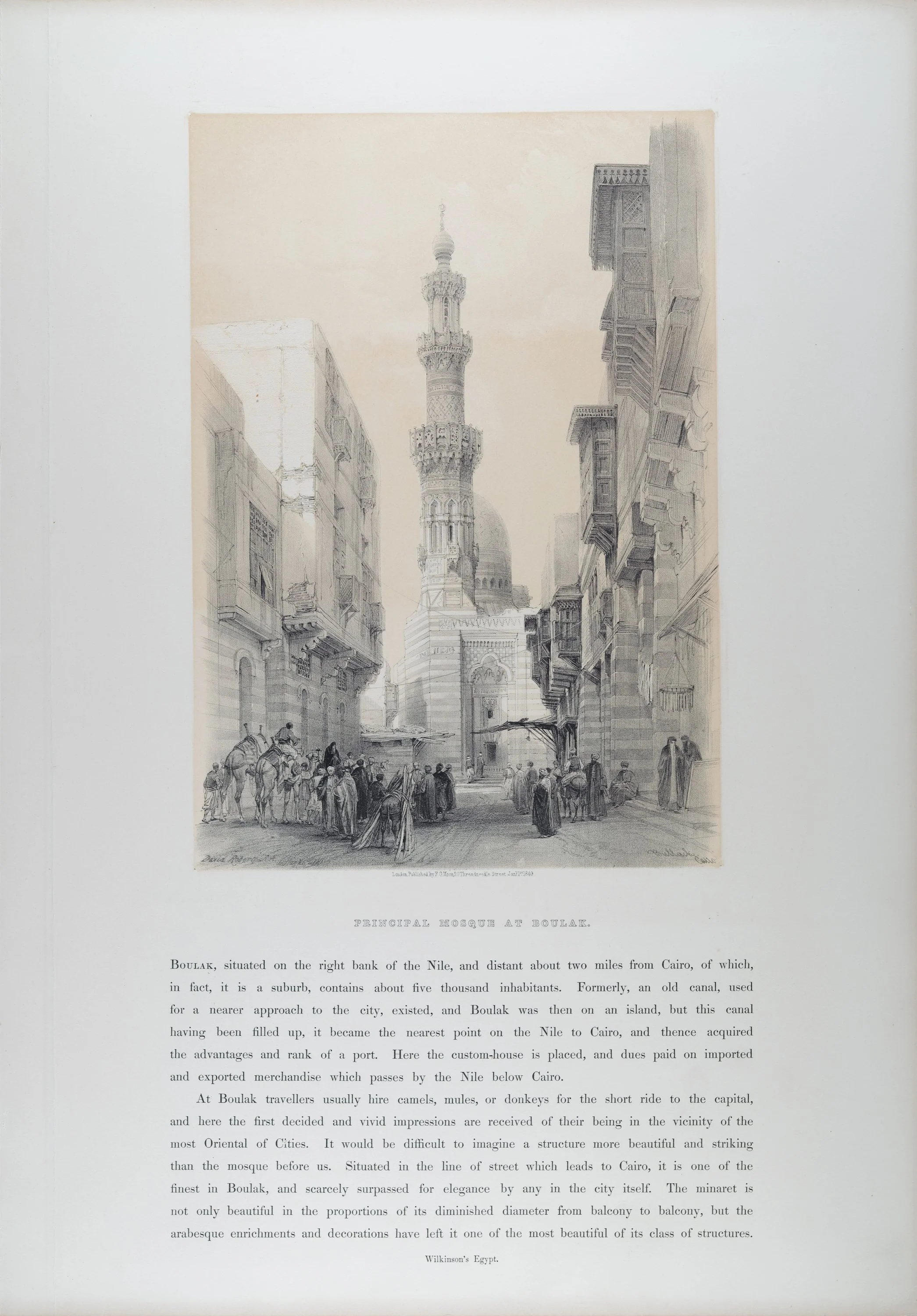
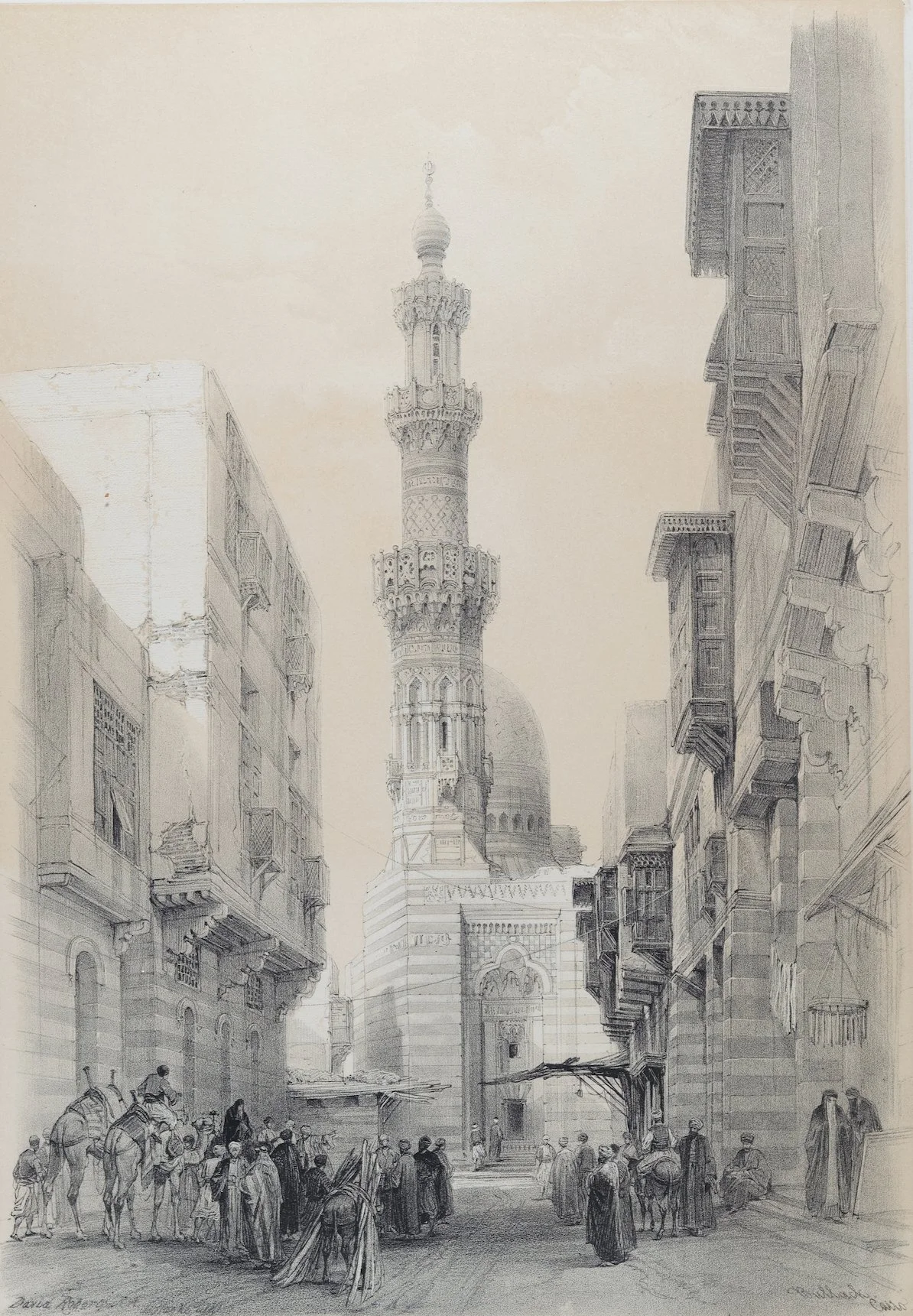
This duotone lithograph is printed on a sheet with wide margins. Overall the sheet measures 23.88" high and 16.75" wide. The print is signed in plate in the lower left and titled in the lower right. There is an area of paper loss in the lower edge of the sheet, some small areas of discoloration in the margins and a faint vertical crease in the right margin. None of this would be visible behind a mat at framing. The image is in excellent condition.
The drawings and watercolors from Roberts' tour of the Holy Land and Egypt were collated together into folios and released over a seven year period by the publisher F.G. Moon from 20 Threadneedle Street London. This lithograph is from the Royal Subscription Edition (1842-1849) with only 500 copies produced per depiction. Louis Haghe (the Belgian engraver and friend of Roberts) worked on all of the lithographs for this series.
David Roberts (1796-1864) was born outside of Edinburgh, Scotland. At age 10 he became a house painter’s apprentice. He continued painting houses and eventually theater scenes in Edinburgh and then in London. His friend, J. M. W. Turner, recognized his artistic talent and encouraged him to become a full-time artist.
In 1839 Roberts traveled to Egypt and then in 1840, through the Holy Land, concluding in Jerusalem. Upon his return to England, F. G. Moon agreed to publish lithographs created by Louis Haghe from Robert’s sketches and watercolors. This publication was highly acclaimed and very popular for its esthetic quality, its historical and topographical accuracy, and Robert’s dramatic depiction of his scenes. Queen Victoria and Charles Dickens were among the subscribers who collected his works. Roberts' and Haghe’s duotone lithographs, often colored, remain extremely sought-after today and have been rising steadily in value.