 Image 1 of 5
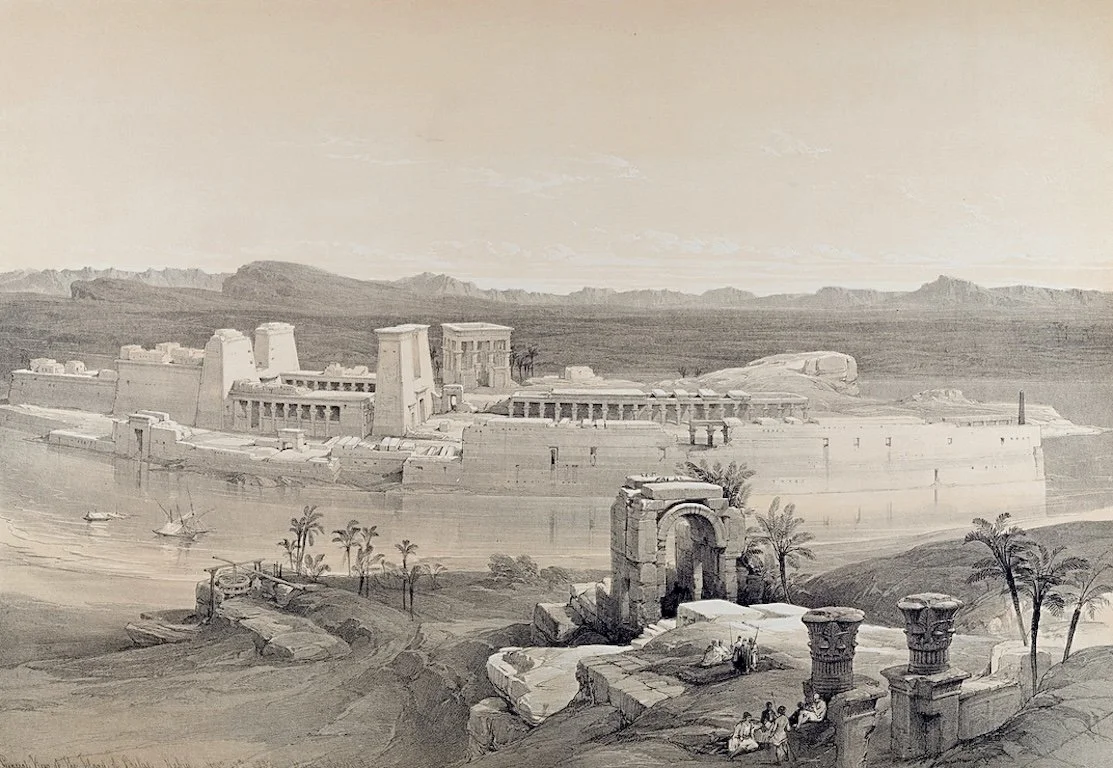 Image 2 of 5
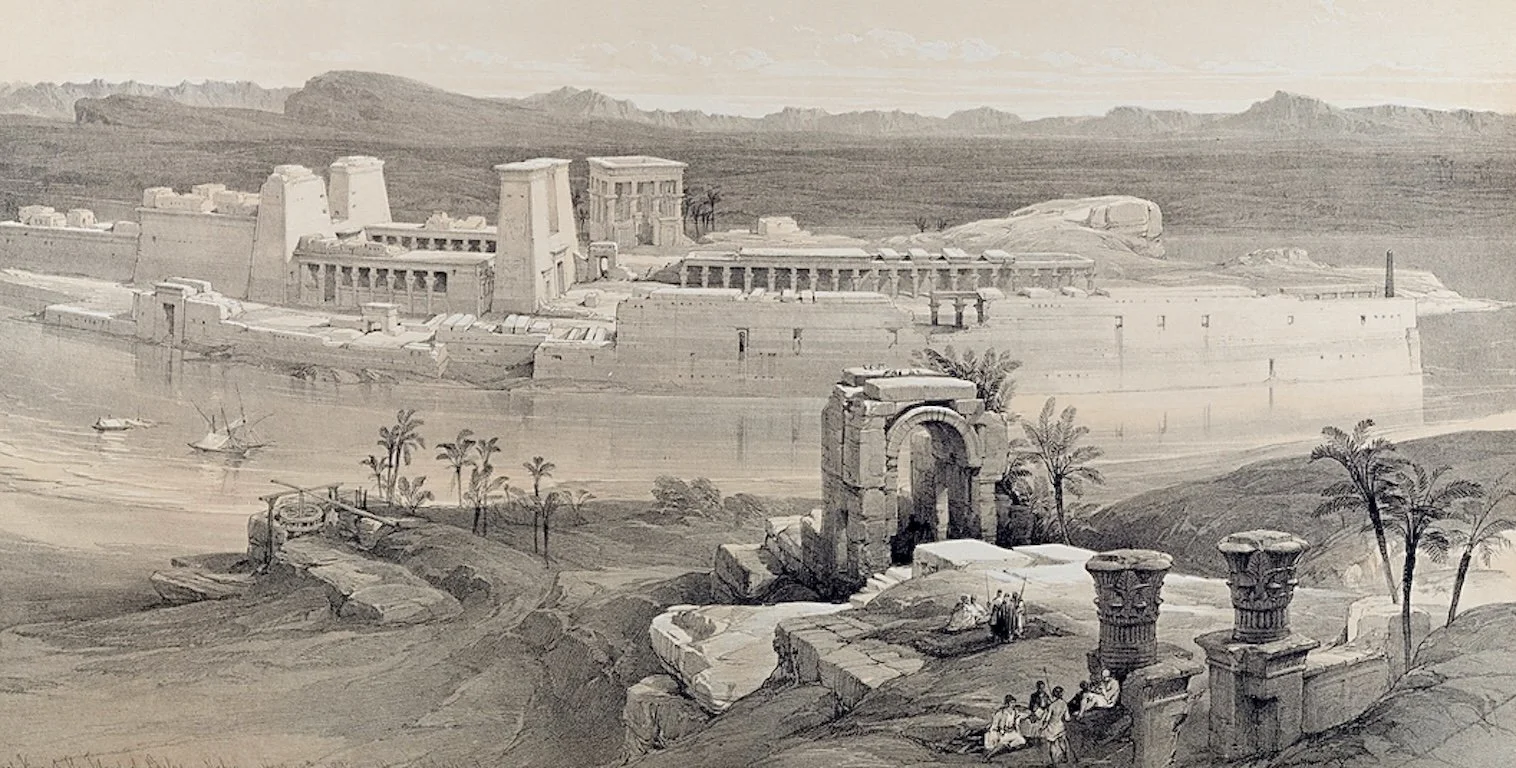 Image 3 of 5
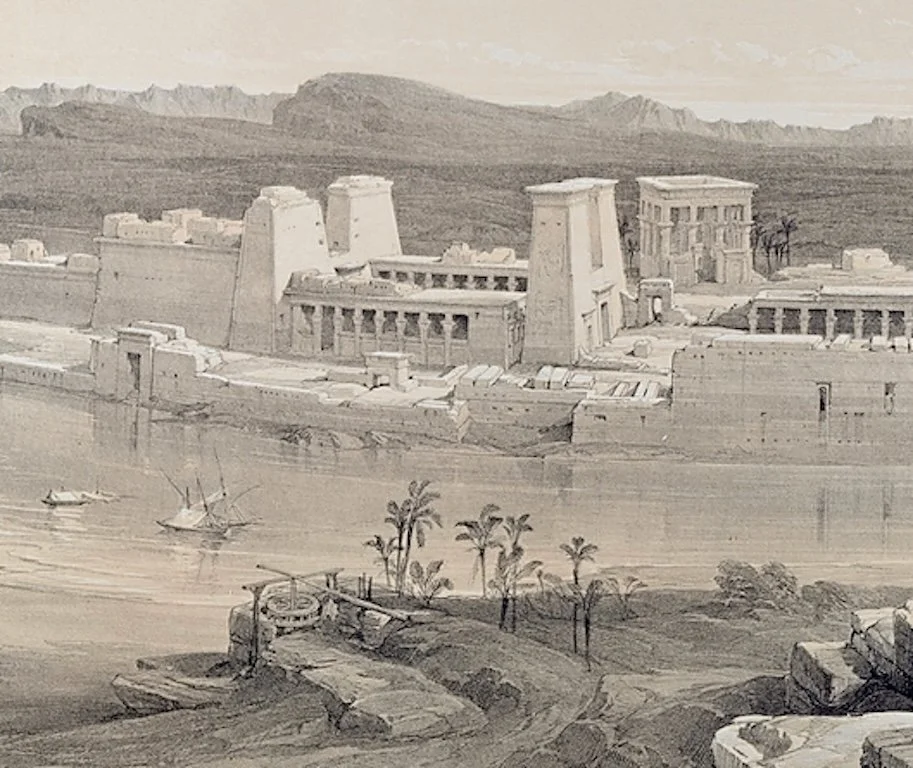 Image 4 of 5
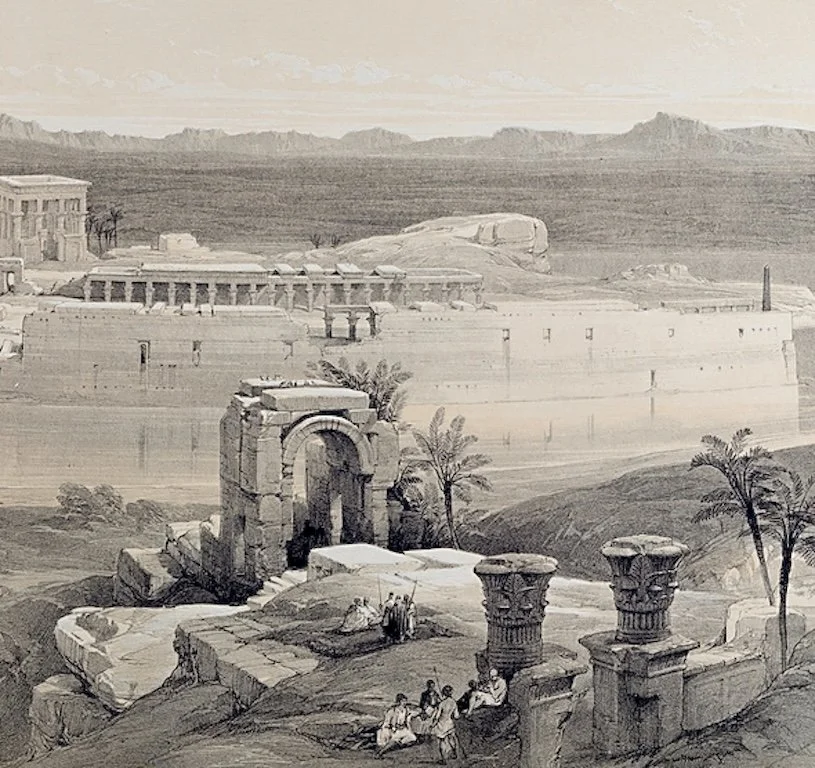 Image 5 of 5
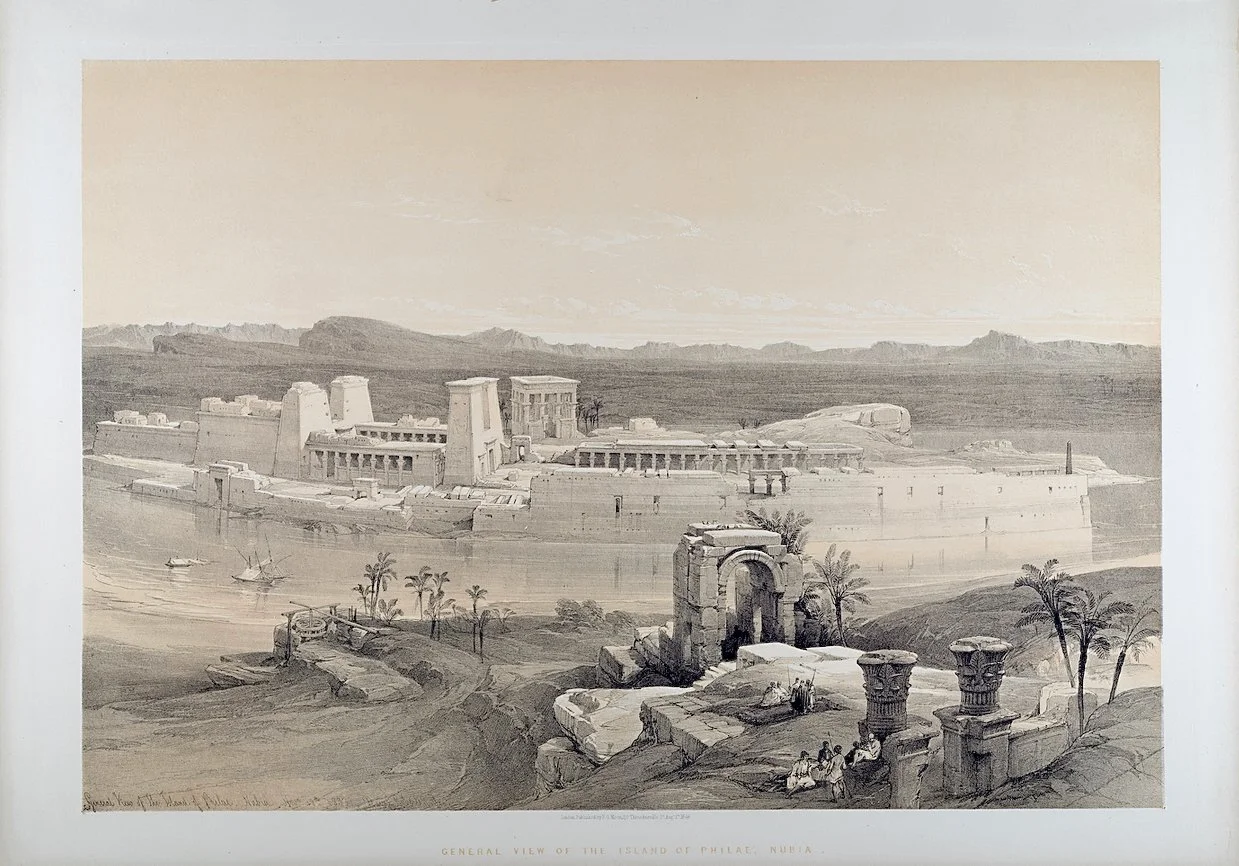
In this lithograph, Roberts depicts the monumental pylons, colonnades, and stone structures of the Temple of Isis at Philae, rising above the rocky terrain in its original location before being moved in modern times to save it from flooding following the construction of the Aswan Dam. With the Nile River in the foreground, the water creates depth and frames the island, emphasizing its isolation and sacred character. Egyptians are seen in an ancient structure on the opposite bank of the Nile and traditional sailing feluccas are seen in the Nile, adding scale and suggesting everyday life along the river.
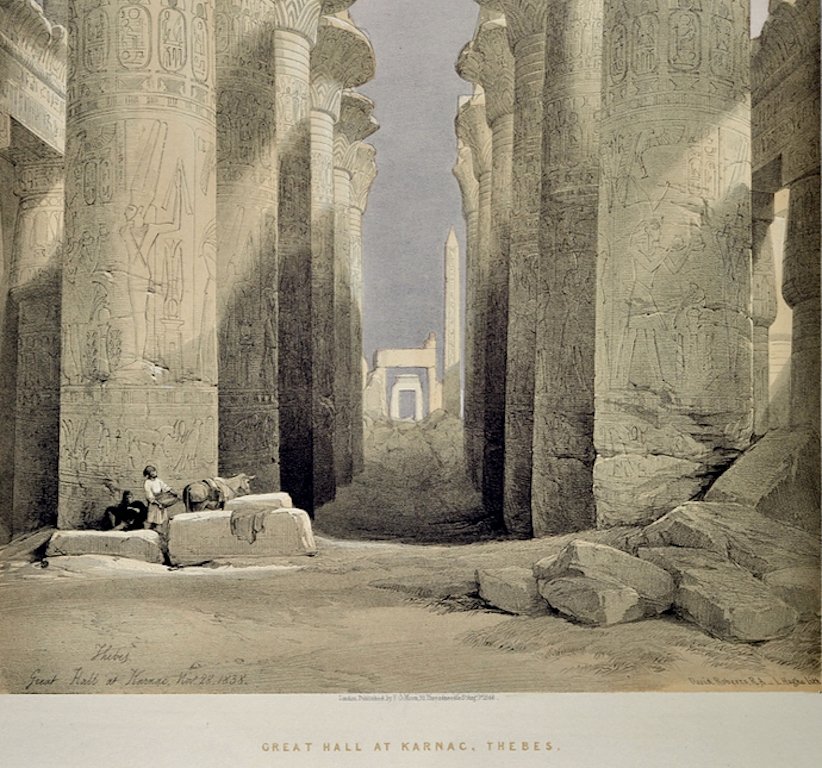
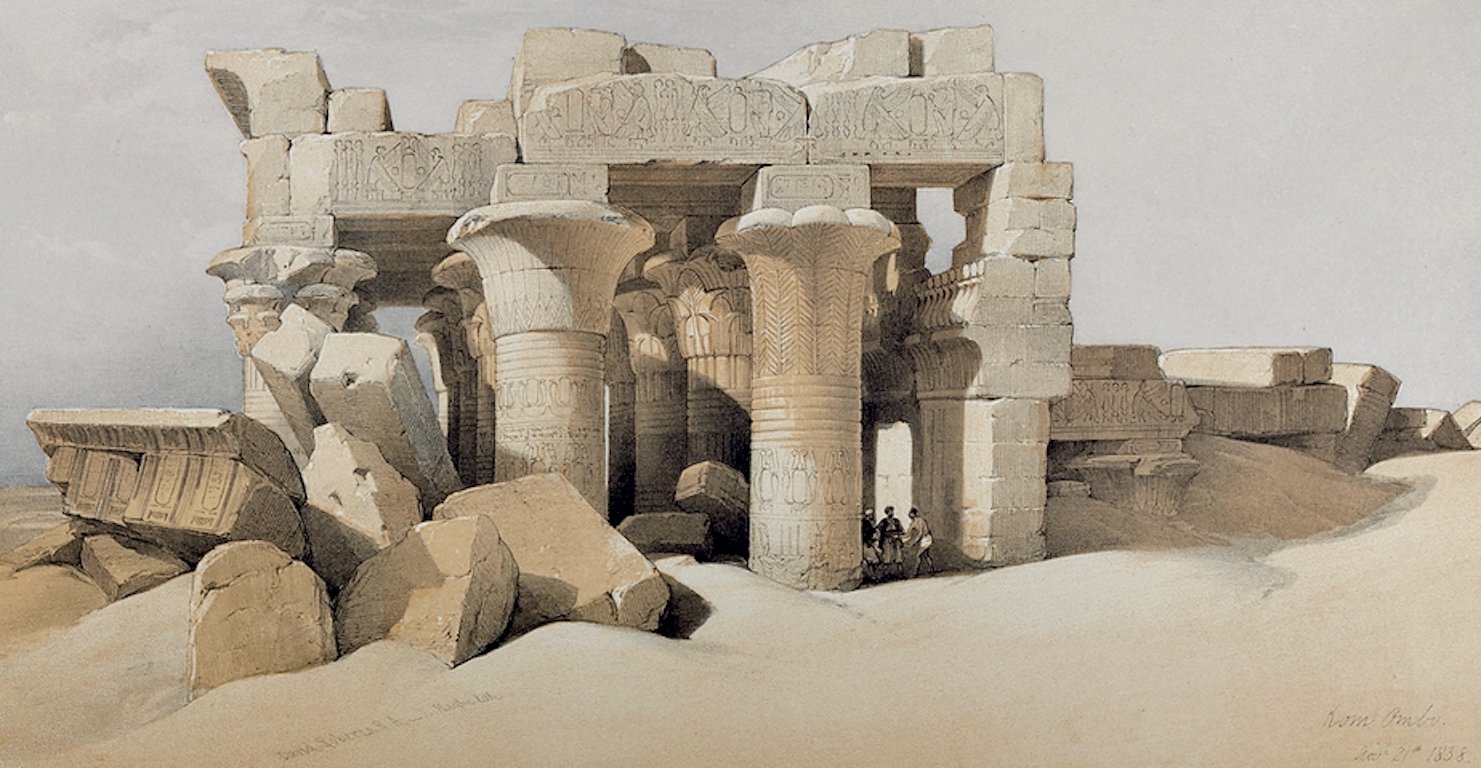
Roberts uses strong contrasts and expansive sky to create a romantic and picturesque view of the ruins, emphasizing both their antiquity and their grandeur. The composition balances topographical accuracy with romantic aesthetic effects, typical of 19th-century travel imagery. Roberts carefully records architectural details while also framing the site as an exotic and timeless landscape.
Philae had significant religious Importance in ancient Egypt. The island of Philae was one of the most important centers for the worship of Isis, one of the major deities in ancient Egyptian religion. Pilgrims traveled there for rituals connected to the myth of Isis and Osiris, and the temple complex became a focal point for religious devotion in the late pharaonic period. Philae is historically significant because it was one of the last places where traditional Egyptian religion continued to be practiced. Even after the spread of Christianity in Egypt, priests at Philae maintained the cult of Isis until the 6th century CE, when it was finally closed under the Byzantine emperor Justinian I. The temple complex reflects multiple historical periods, including: Ptolemaic rule under Ptolemy II Philadelphus. Later parts of the temple were converted into Christian churches.
19th-Century interest in sites like Philae fascinated European travelers, artists, and scholars. Roberts’ lithographs helped popularize Egyptian monuments for Western audiences, contributing to the growth of Egyptology. His images were among the most widely circulated visual records of Egyptian ruins before photography became common.
In the 20th century the original island of Philae was threatened by flooding after construction of the Aswan High Dam. An international campaign led by UNESCO relocated the temple complex to nearby Agilkia Island, preserving the monuments.
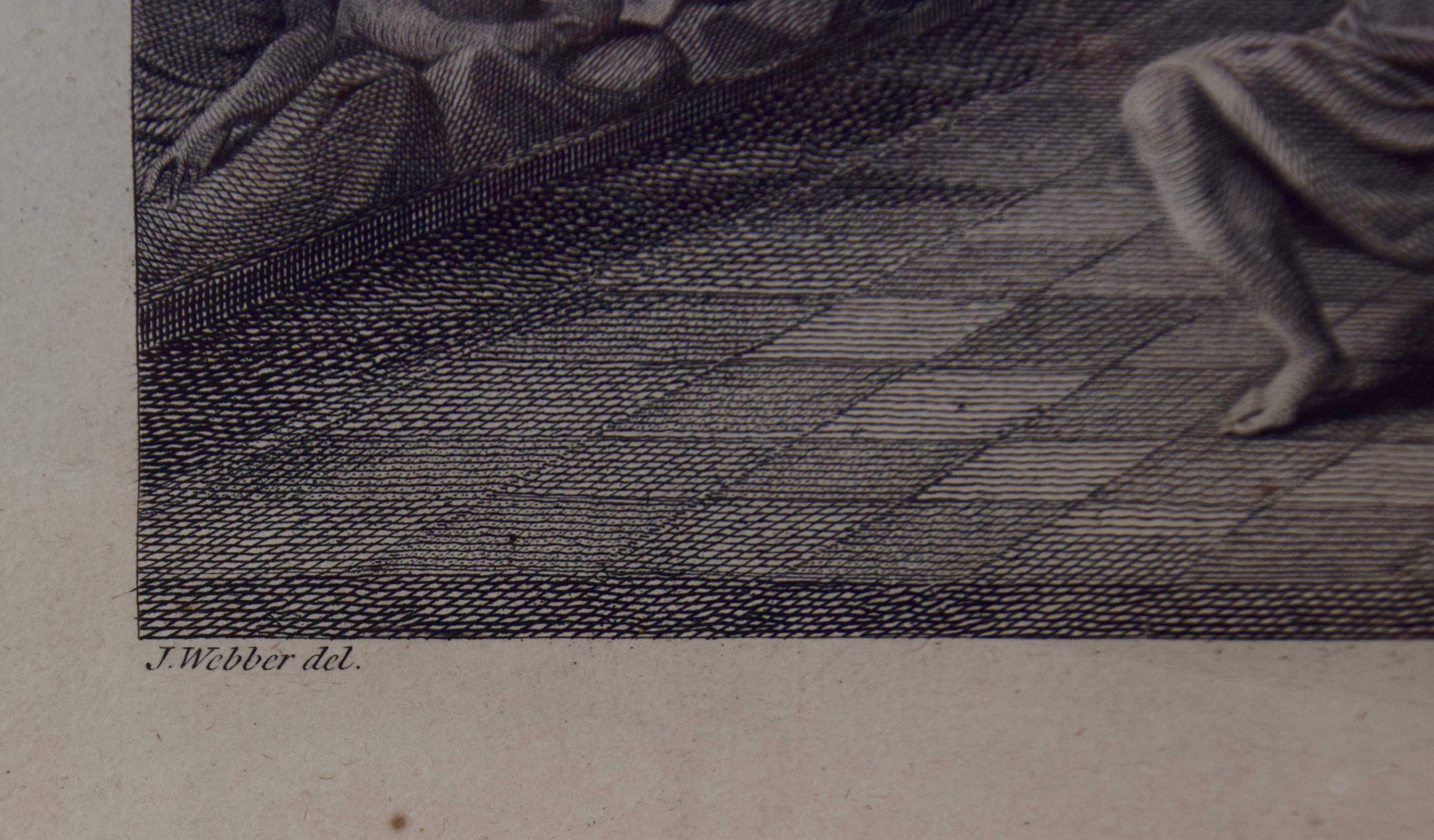
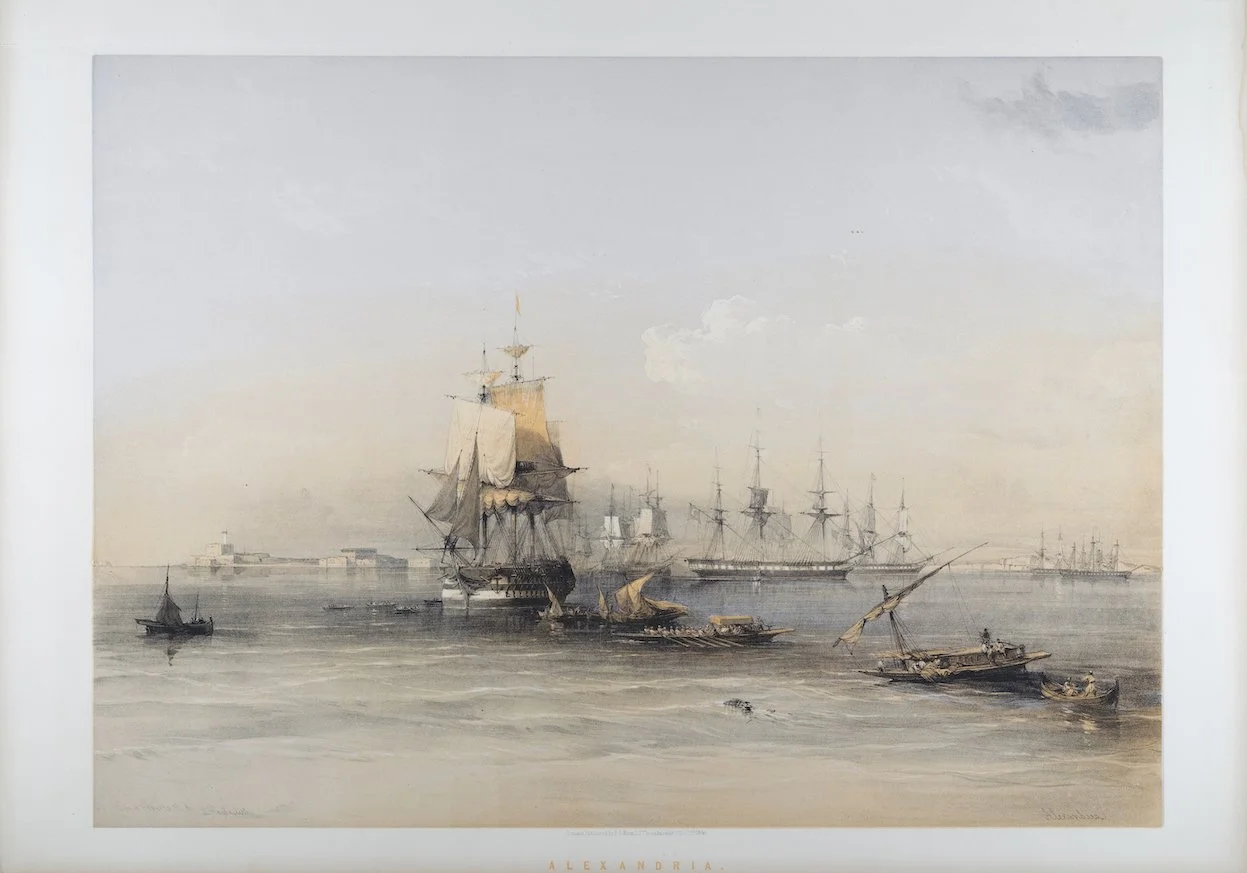
This duotone lithograph is printed on a sheet with wide margins. Overall the sheet measures 16.75" high and 23.88" wide. The print is signed and titled in plate in the lower left. The print has a faint horizontal crease in the upper margin and two tiny spots in the upper margin and one in the both the right and the left margins, none of which would be visible behind a mat at framing. The image is in excellent condition.
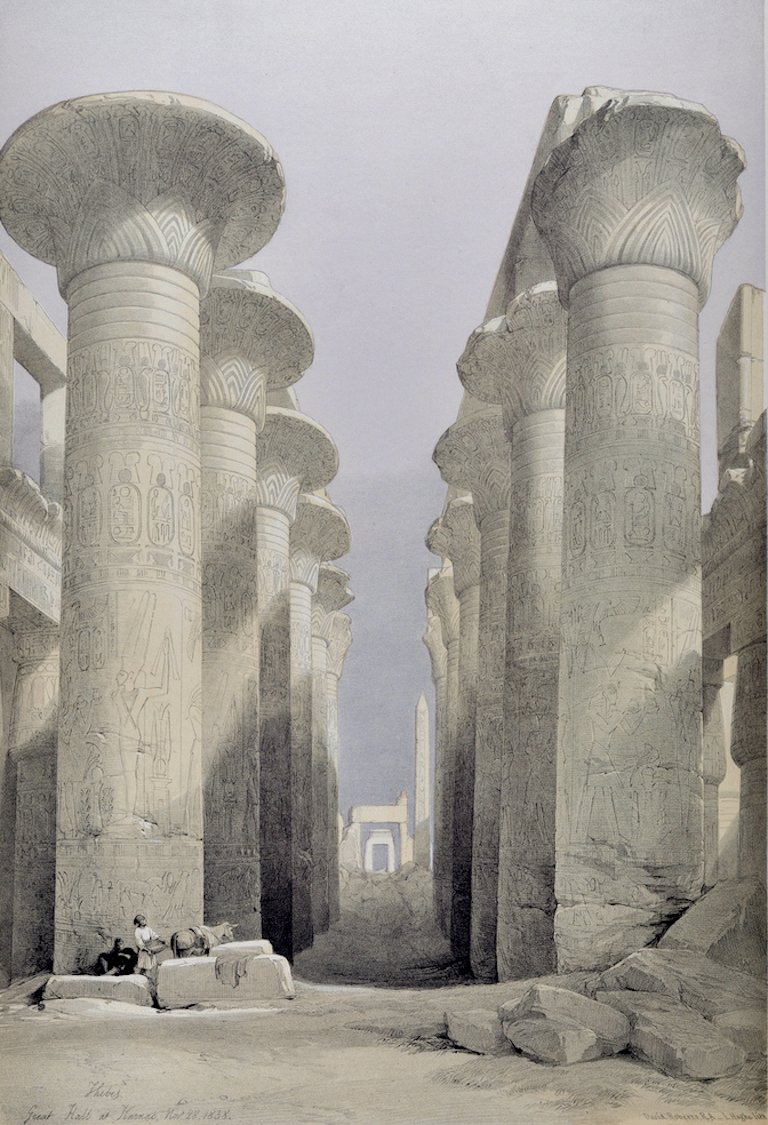
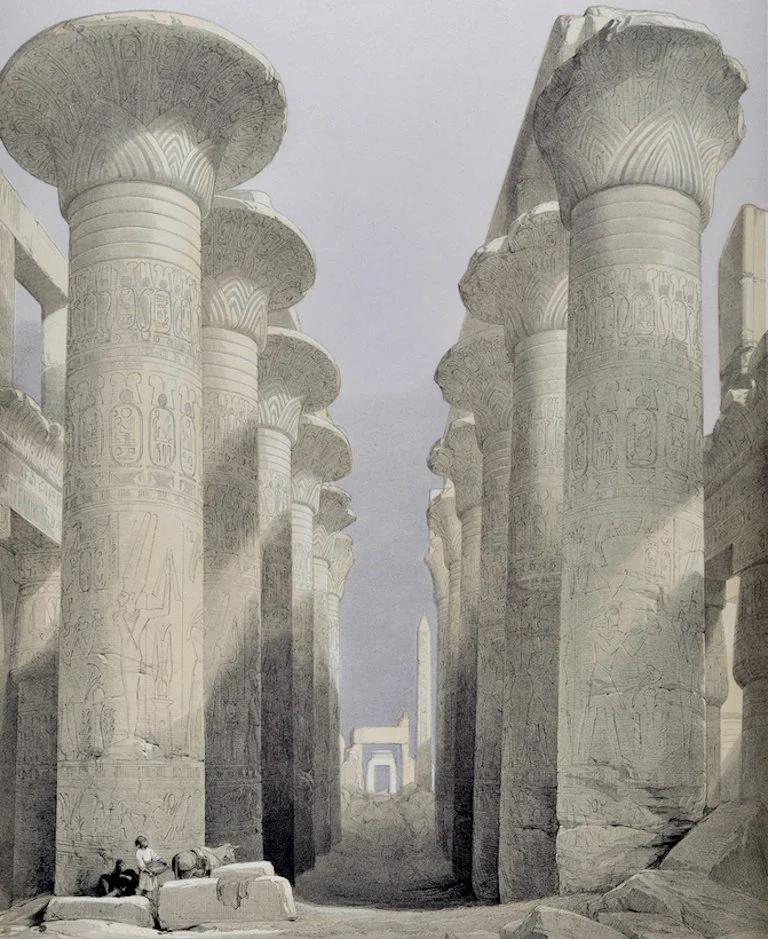
The drawings and watercolors from Roberts' tour of the Holy Land and Egypt were collated together into folios and released over a seven year period by the publisher F.G. Moon from 20 Threadneedle Street London. This lithograph is from the Royal Subscription Edition (1842-1849) with only 500 copies produced per depiction. Louis Haghe (the Belgian engraver and friend of Roberts) worked on all of the lithographs for this series.
David Roberts (1796-1864) was born outside of Edinburgh, Scotland. At age 10 he became a house painter’s apprentice. He continued painting houses and eventually theater scenes in Edinburgh and then in London. His friend, J. M. W. Turner, recognized his artistic talent and encouraged him to become a full-time artist.
In 1839 Roberts traveled to Egypt and then in 1840, through the Holy Land, concluding in Jerusalem. Upon his return to England, F. G. Moon agreed to publish lithographs created by Louis Haghe from Robert’s sketches and watercolors. This publication was highly acclaimed and very popular for its esthetic quality, its historical and topographical accuracy, and Robert’s dramatic depiction of his scenes. Queen Victoria and Charles Dickens were among the subscribers who collected his works. Roberts' and Haghe’s duotone lithographs, often colored, remain extremely sought-after today and have been rising steadily in value.