 Image 1 of 4
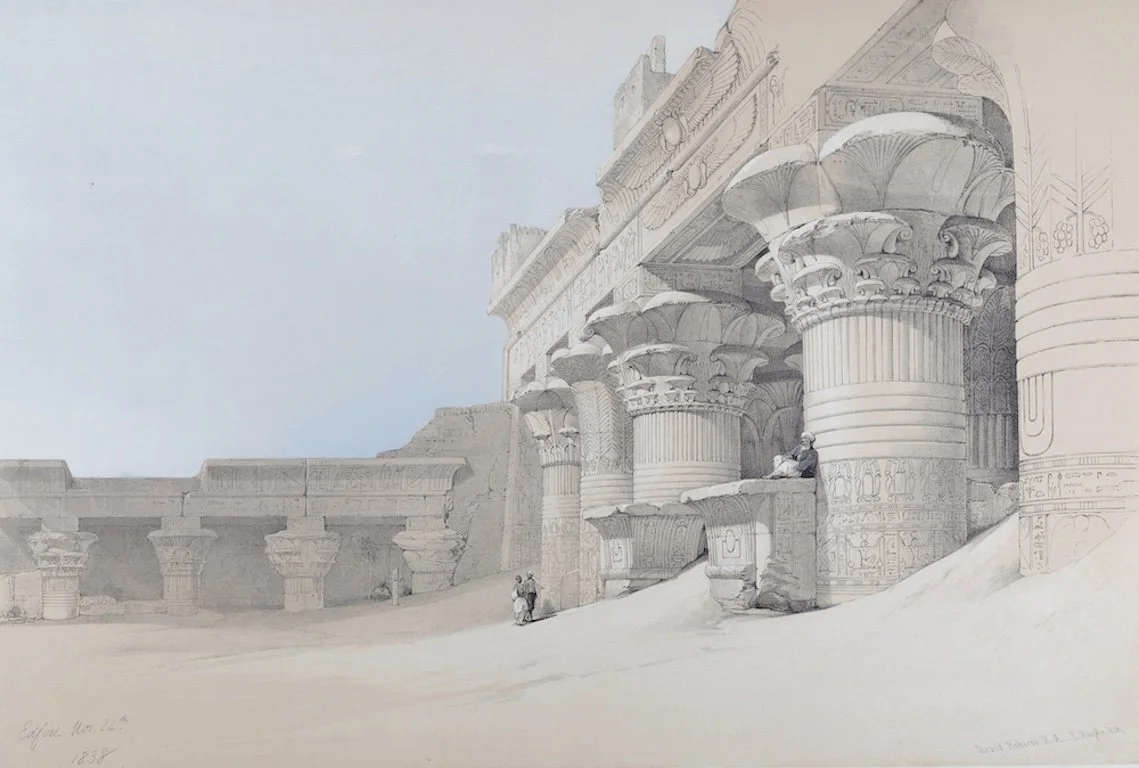 Image 2 of 4
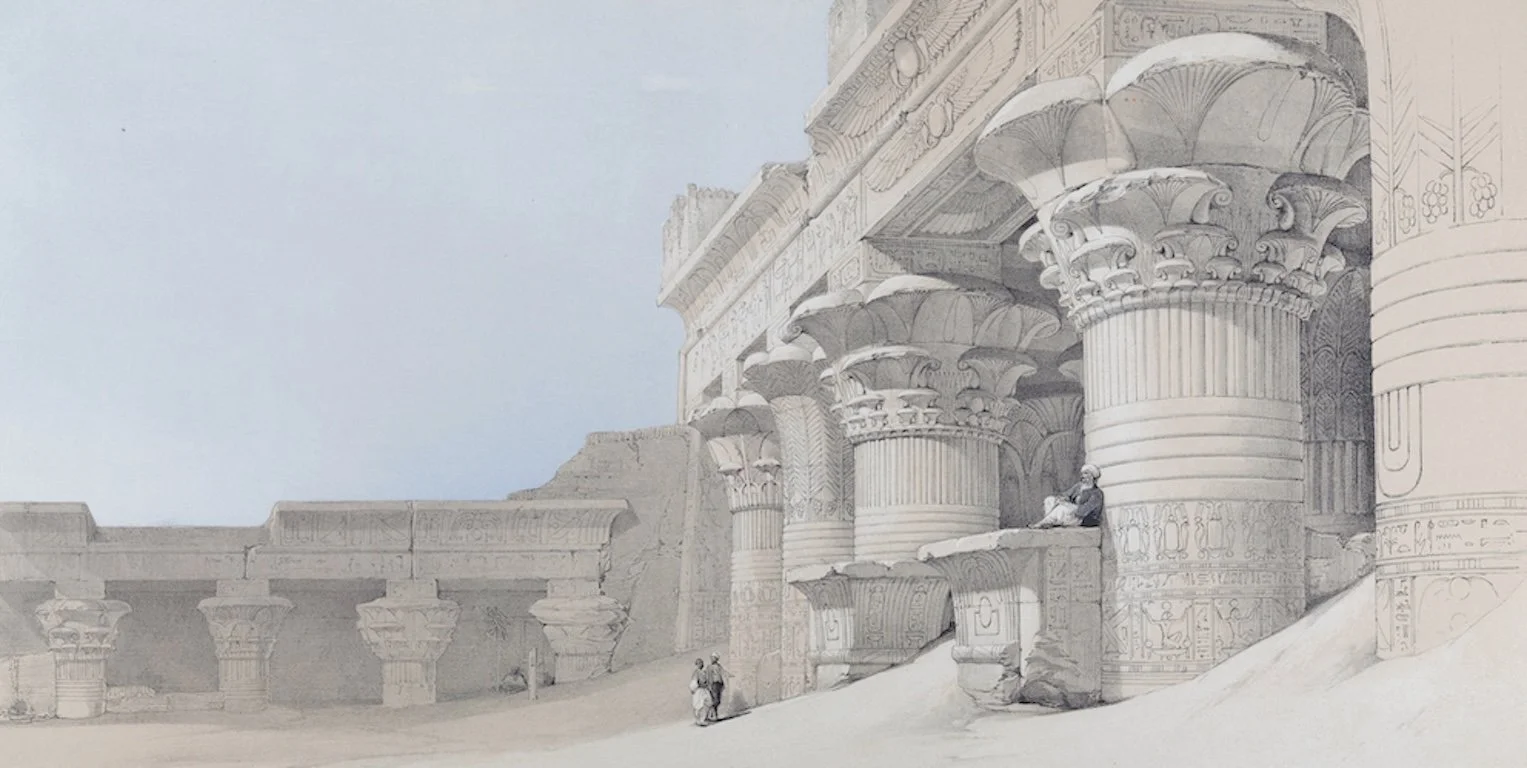 Image 3 of 4
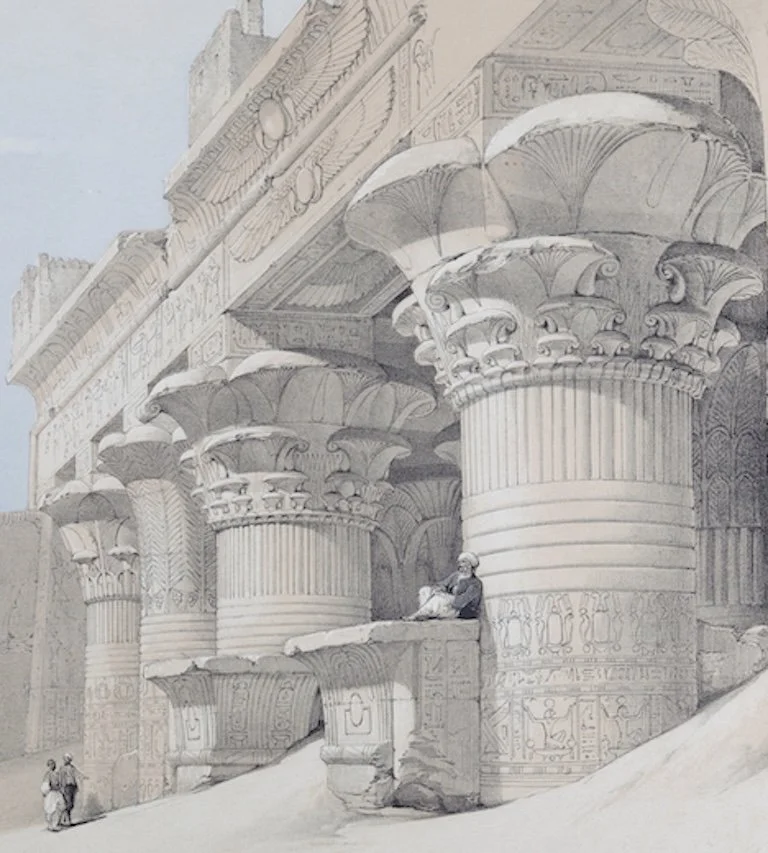 Image 4 of 4
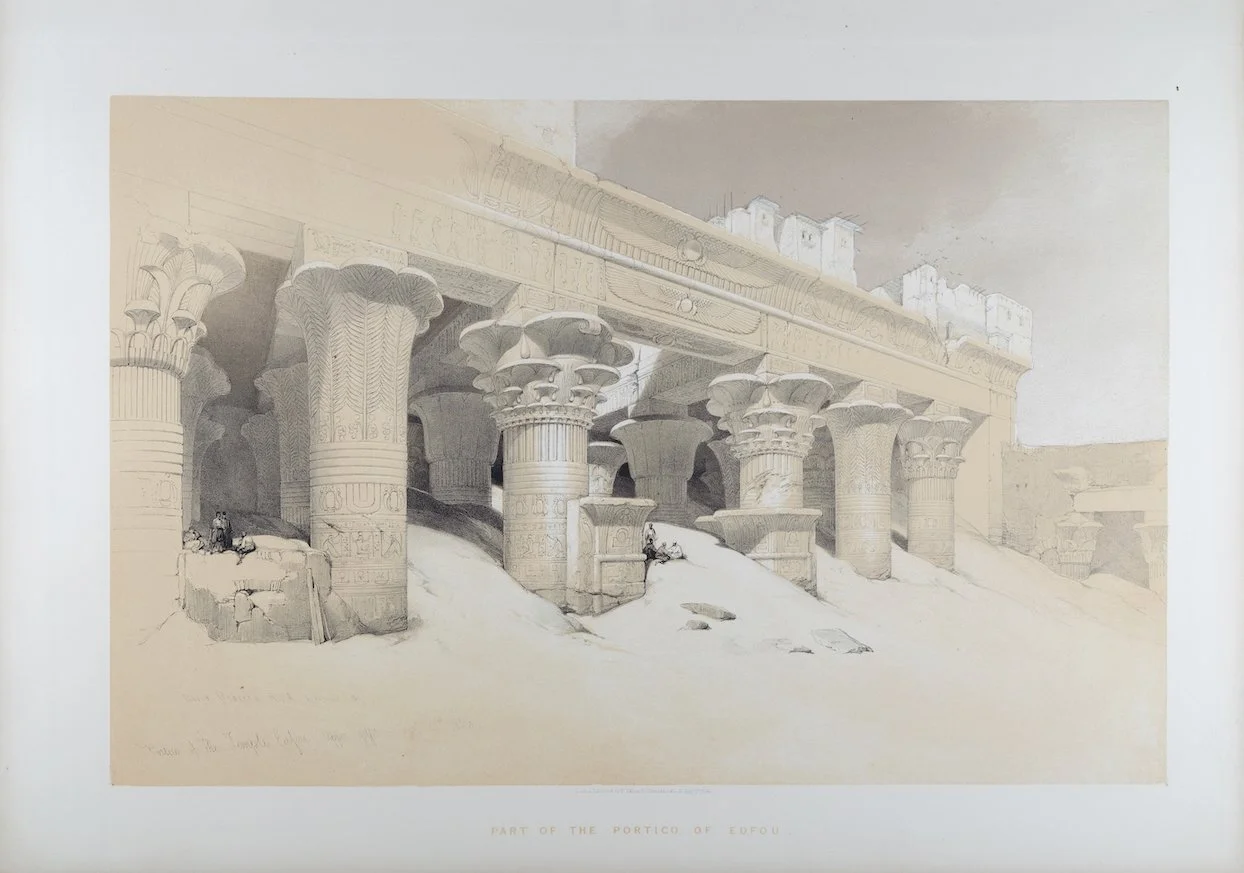
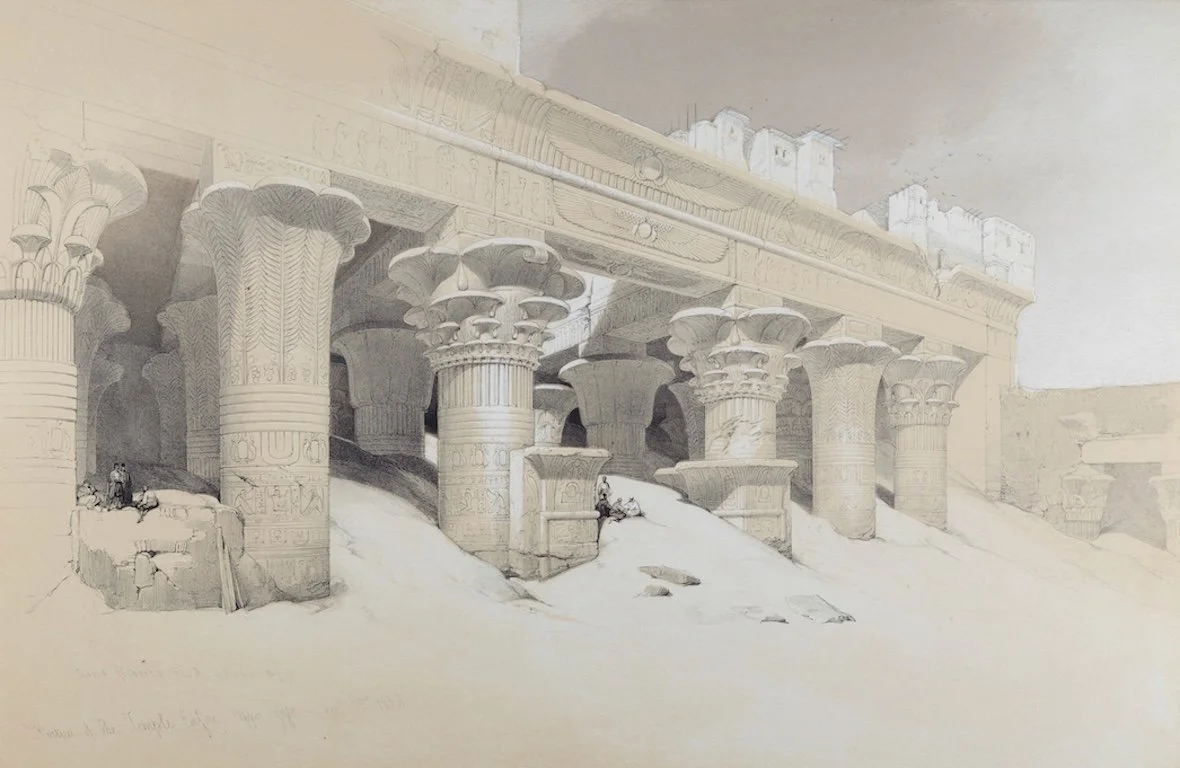
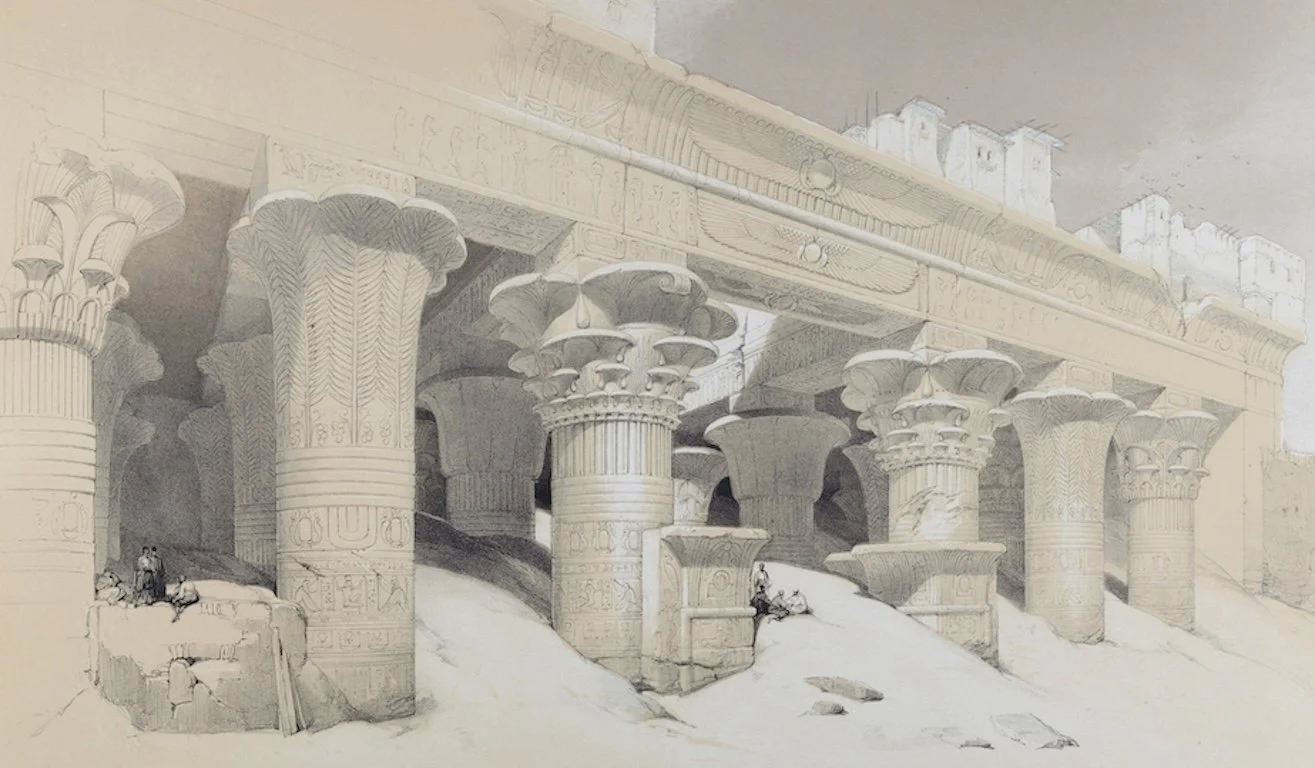
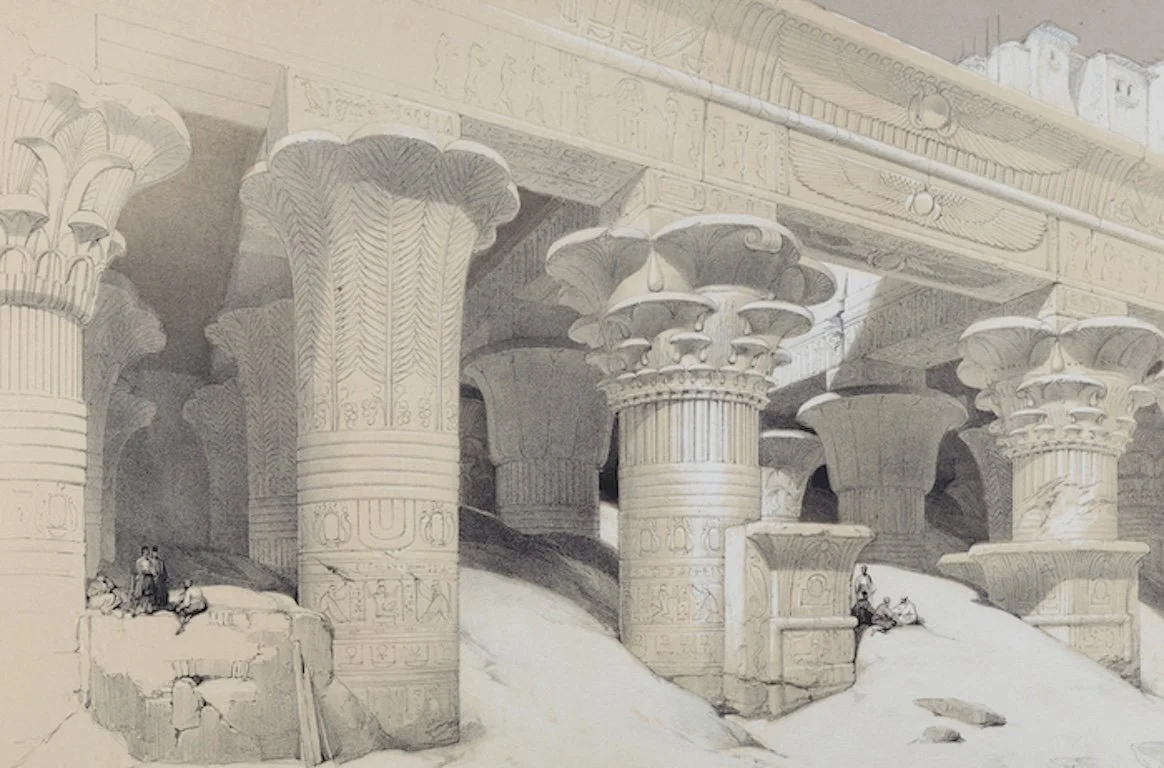
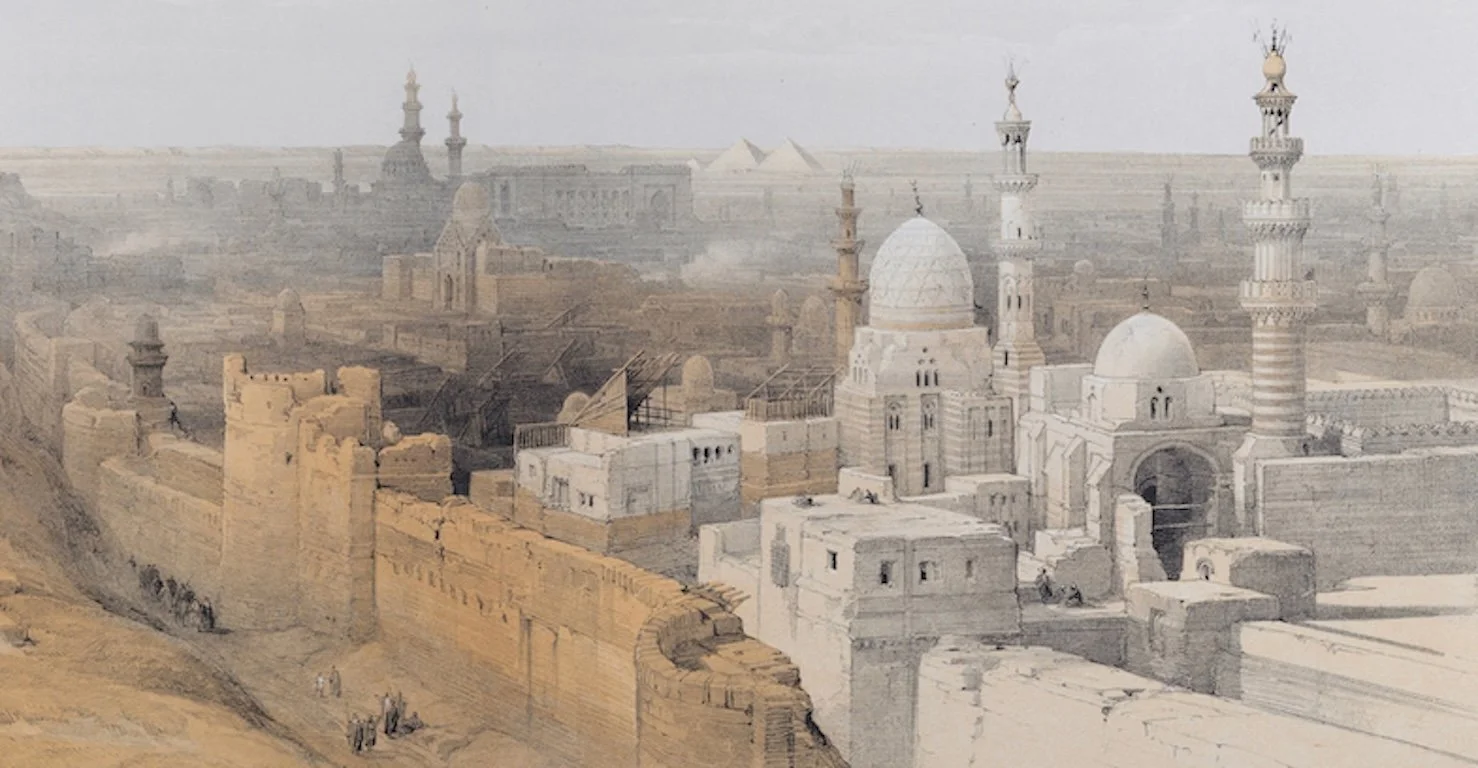
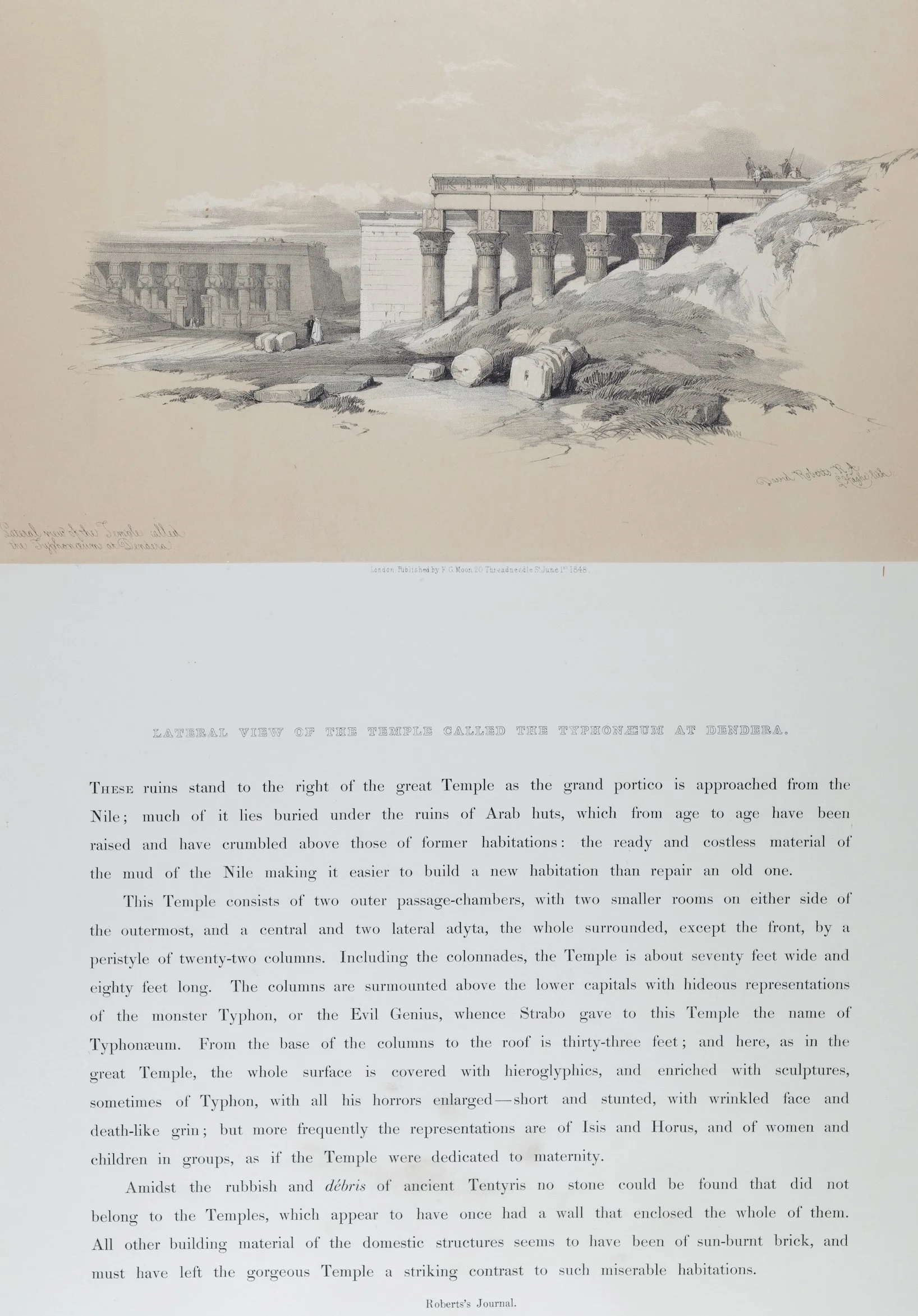
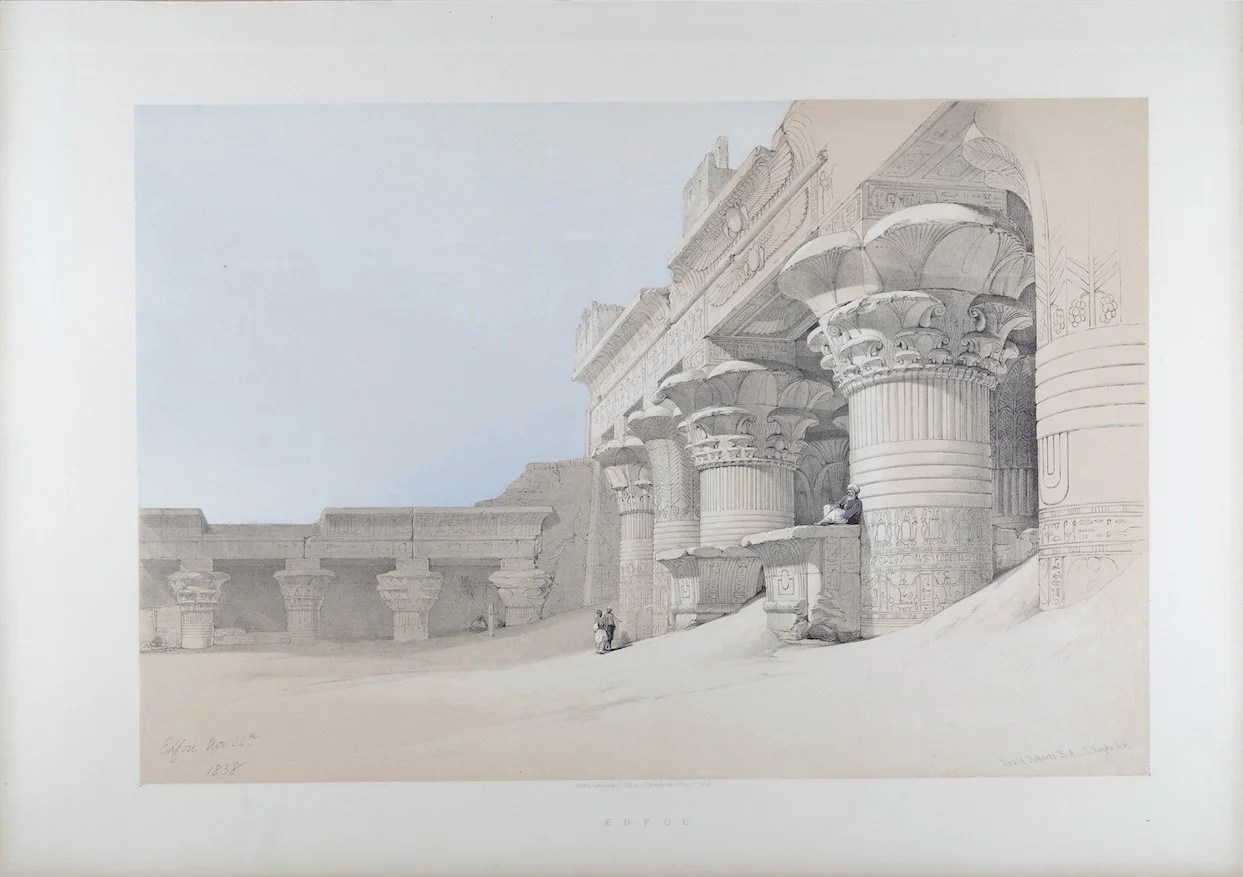
This lithograph, created from Roberts' drawing on November 24, 1838, depicts a portion of the great Temple of Horus at Edfou in Upper Egypt, focusing on the monumental portico rather than the temple as a whole. The emphasis is on scale, surface, and inscription. Massive stone columns dominate the scene. They rise thick and close-set, their capitals broad and heavy, creating a powerful sense of enclosure. Almost every available surface is densely covered with hieroglyphs and carved reliefs, rendered with painstaking clarity. The carvings feel almost overwhelming, turning the architecture into a continuous stone text. Light enters from the side, grazing the columns and deepening the shadows between them. This contrast heightens the sense of depth and age: the portico feels cool, ancient, and solemn, as if it has absorbed centuries of silence. The stone appears worn but enduring, its edges softened by time rather than ruined by it. The structure was partially enveloped by sand when Roberts visited in the 1830's. He includes two Egyptian men in conversation near a column base and another sitting on part of the stone structure leaning back on a column, giving a sense of proportion. They appear insignificant beside the architecture, reinforcing the idea of ancient Egypt as a civilization of colossal ambition and sacred permanence. Overall, the image is less about narrative than awe. It invites the viewer to linger on texture, inscription, and scale, presenting the portico not just as an architectural feature, but as a monumental threshold between the human world and the divine.
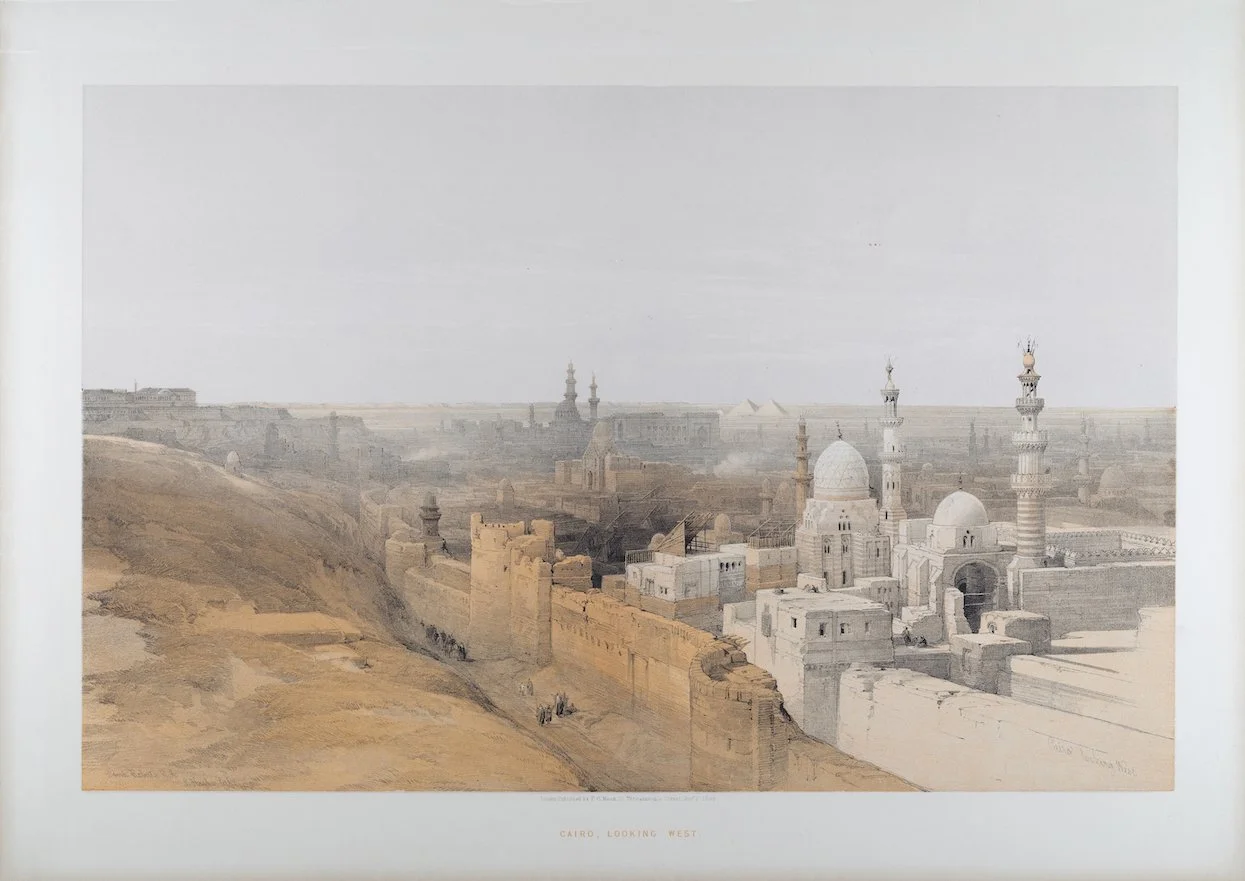
This duotone lithograph is printed on a sheet with wide margins. Overall the sheet measures 16.75" high and 23.88" wide. The print is signed in plate in the lower right and titled in the lower left. There is a tiny spot in the lower margin on the right and a faint horizontal crease in the upper margin. None of this would be visible behind a mat at framing. The image portion of the print is in excellent condition.
The drawings and watercolors from Roberts' tour of the Holy Land and Egypt were collated together into folios and released over a seven year period by the publisher F.G. Moon from 20 Threadneedle Street London. This lithograph is from the Royal Subscription Edition (1842-1849) with only 500 copies produced per depiction. Louis Haghe (the Belgian engraver and friend of Roberts) worked on all of the lithographs for this series.
David Roberts (1796-1864) was born outside of Edinburgh, Scotland. At age 10 he became a house painter’s apprentice. He continued painting houses and eventually theater scenes in Edinburgh and then in London. His friend, J. M. W. Turner, recognized his artistic talent and encouraged him to become a full-time artist.
In 1839 Roberts traveled to Egypt and then in 1840, through the Holy Land, concluding in Jerusalem. Upon his return to England, F. G. Moon agreed to publish lithographs created by Louis Haghe from Robert’s sketches and watercolors. This publication was highly acclaimed and very popular for its esthetic quality, its historical and topographical accuracy, and Robert’s dramatic depiction of his scenes. Queen Victoria and Charles Dickens were among the subscribers who collected his works. Roberts' and Haghe’s duotone lithographs, often colored, remain extremely sought-after today and have been rising steadily in value.