 Image 1 of 5
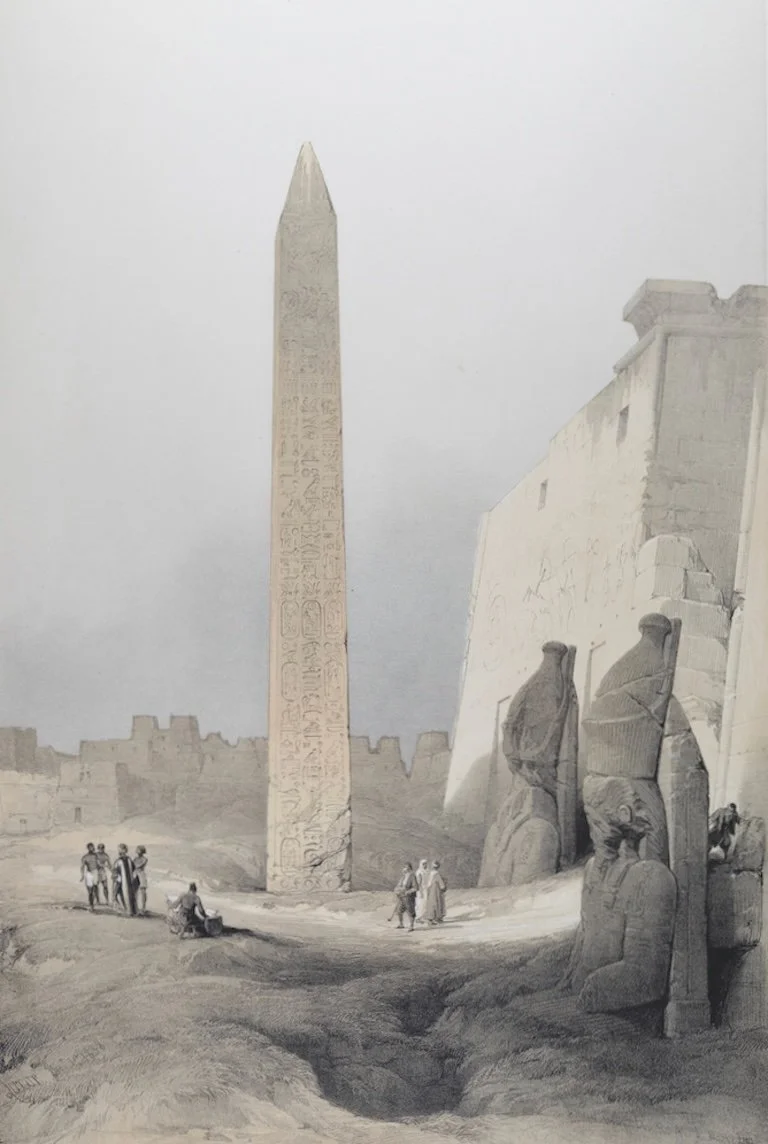 Image 2 of 5
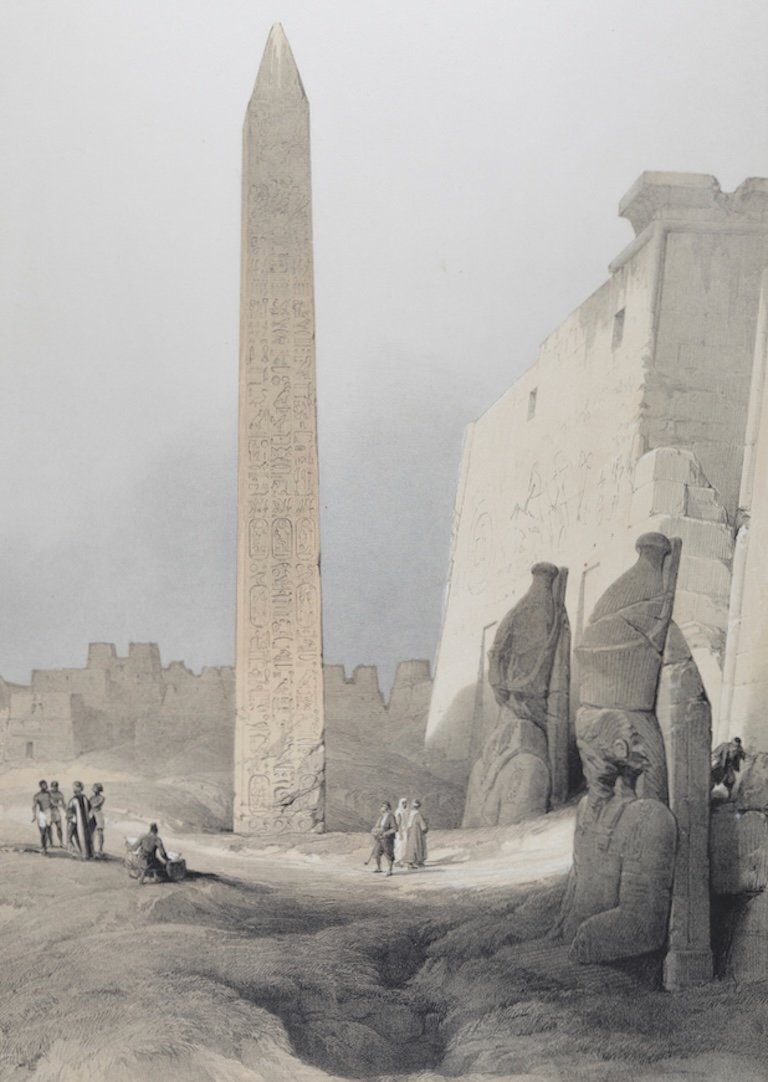 Image 3 of 5
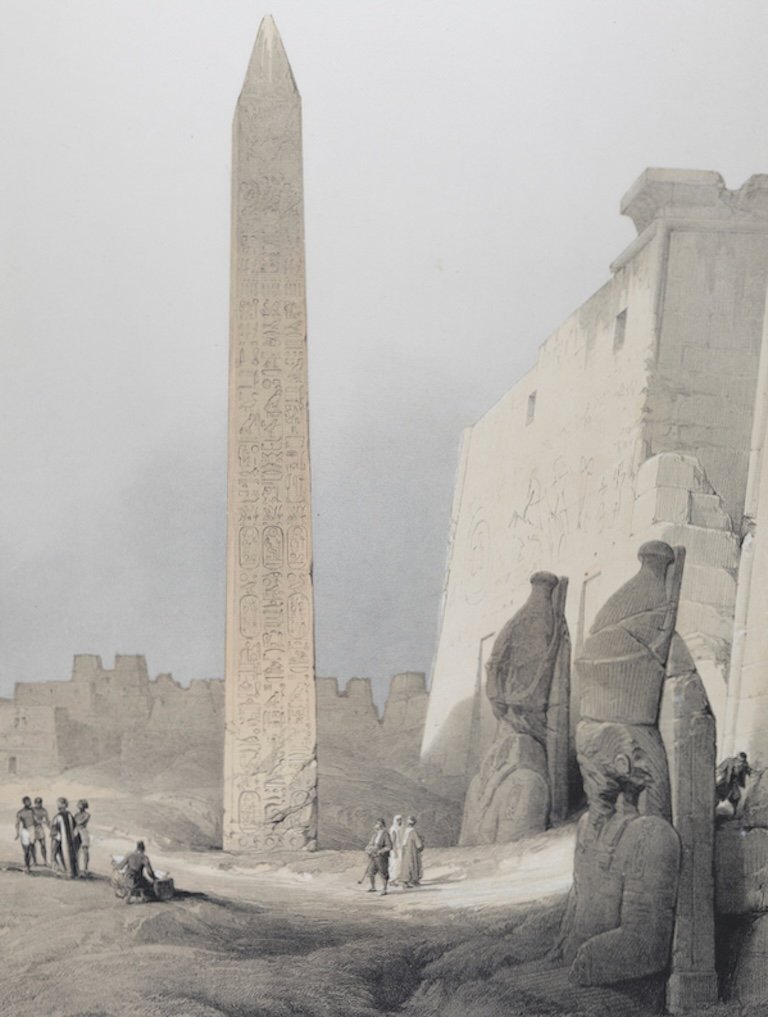 Image 4 of 5
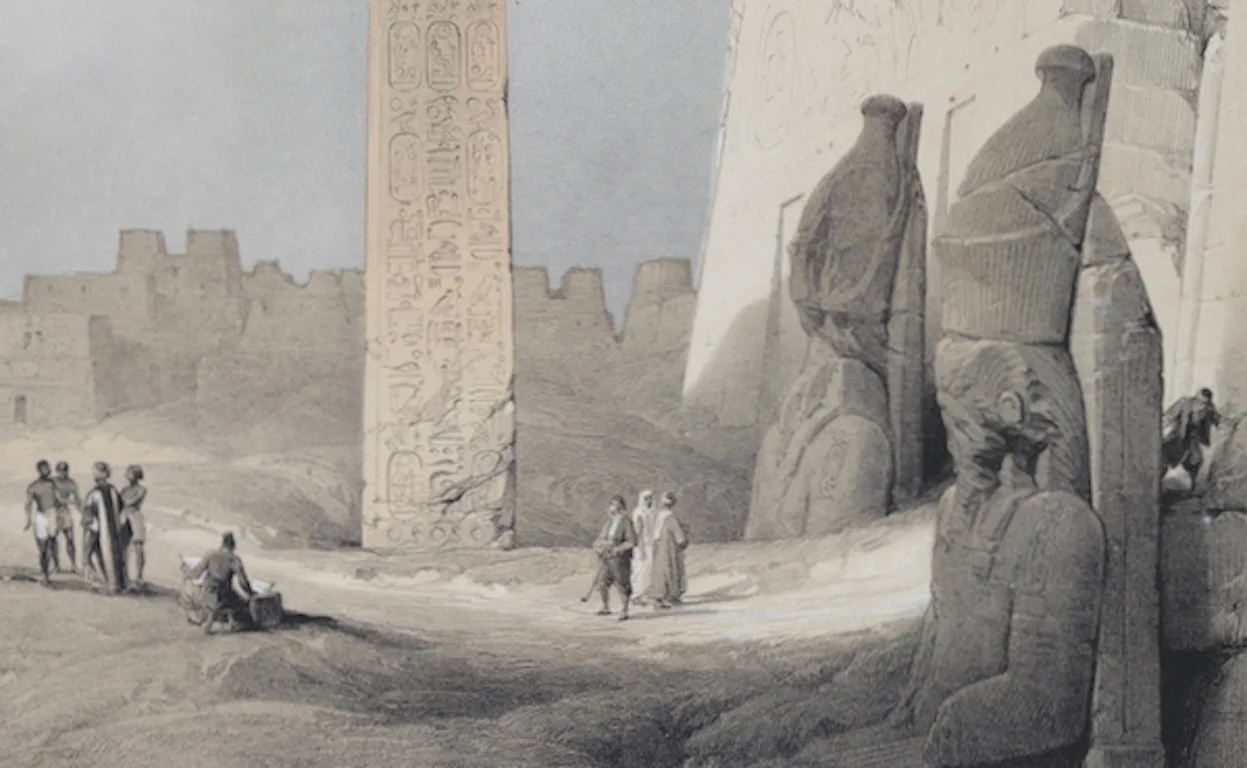 Image 5 of 5
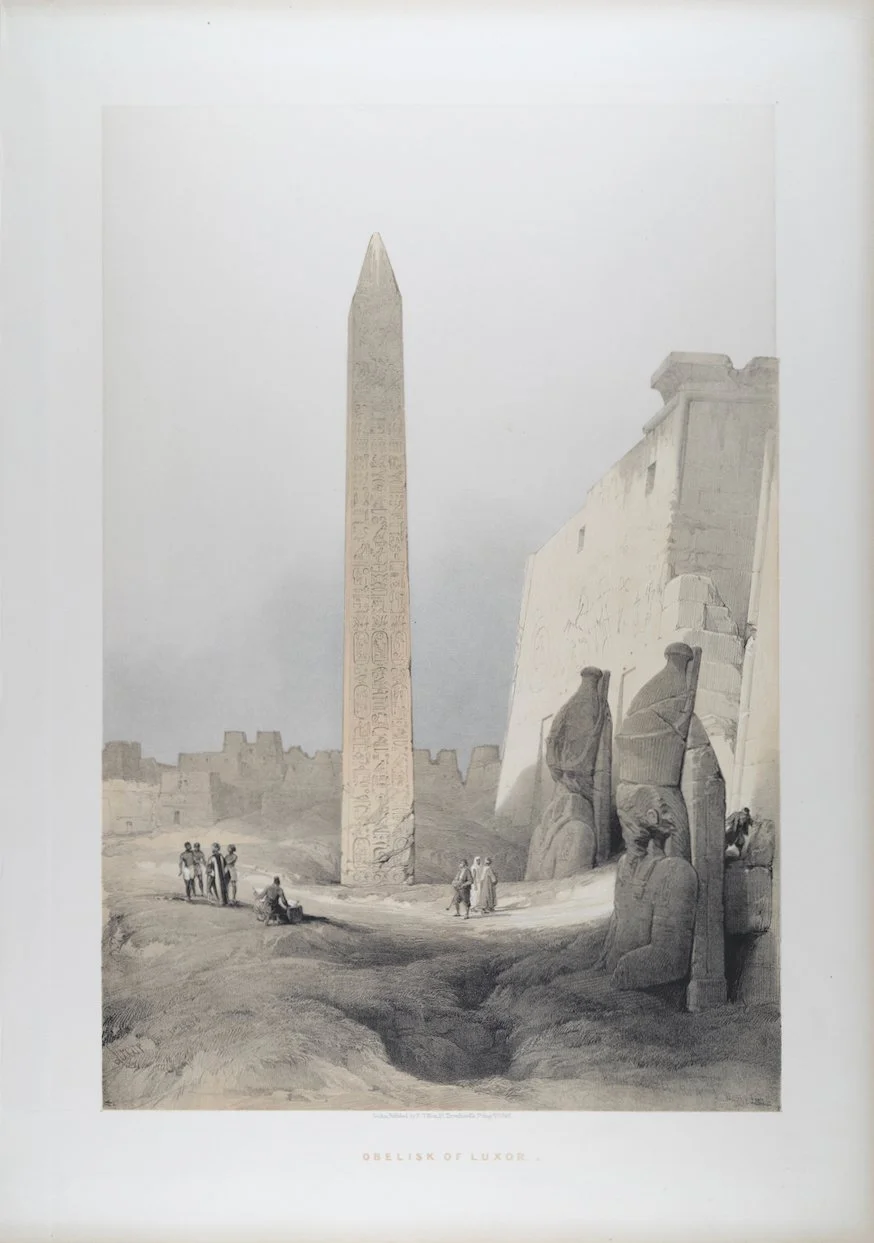
This lithograph depicts the towering obelisk that stands before the First Pylon of the Temple of Luxor. The composition presents the obelisk rising vertically and elegantly against a broad Egyptian sky. Its slender granite shaft tapers upward to a pointed pyramidion, covered in finely rendered hieroglyphic inscriptions praising Ramesses II. Roberts carefully emphasizes the crisp geometry of the monument, its sharp edges contrasting with the weathered stone architecture behind it. In the background, the massive pylons of the temple form a horizontal counterweight to the obelisk’s vertical thrust. Their surfaces are carved with relief scenes, though softened by time. Fallen fragments of statuary and broken colossal figures of Ramesses reinforce the sense of antiquity and partial ruin. Egyptian men are gathered about the base of the obelisk providing scale and cultural perspective to the scene, highlighting the obelisk’s immense height and the continuity between ancient monument and living landscape.
The obelisk stands at the entrance to the Temple of Luxor, one of ancient Egypt’s most important religious complexes. Built primarily during the reigns of Amenhotep III (18th Dynasty) and Ramesses II (19th Dynasty), the temple was dedicated to Amun-Ra, his consort Mut, and their son Khonsu, the Theban Triad. Luxor Temple played a central role in the annual Opet Festival, during which the god Amun’s statue was ceremonially transported from Karnak to Luxor, symbolizing renewal and divine kingship.
Obelisks were solar symbols associated with the god Ra. Their tall, tapering form represented a petrified sunbeam. Placed at temple entrances, they signified divine presence and royal authority.
Originally, two obelisks stood before the Luxor Temple. One remains in situ in Egypt. The other was gifted to France in the 19th century and now stands in the Place de la Concorde in Paris, making the site globally significant.
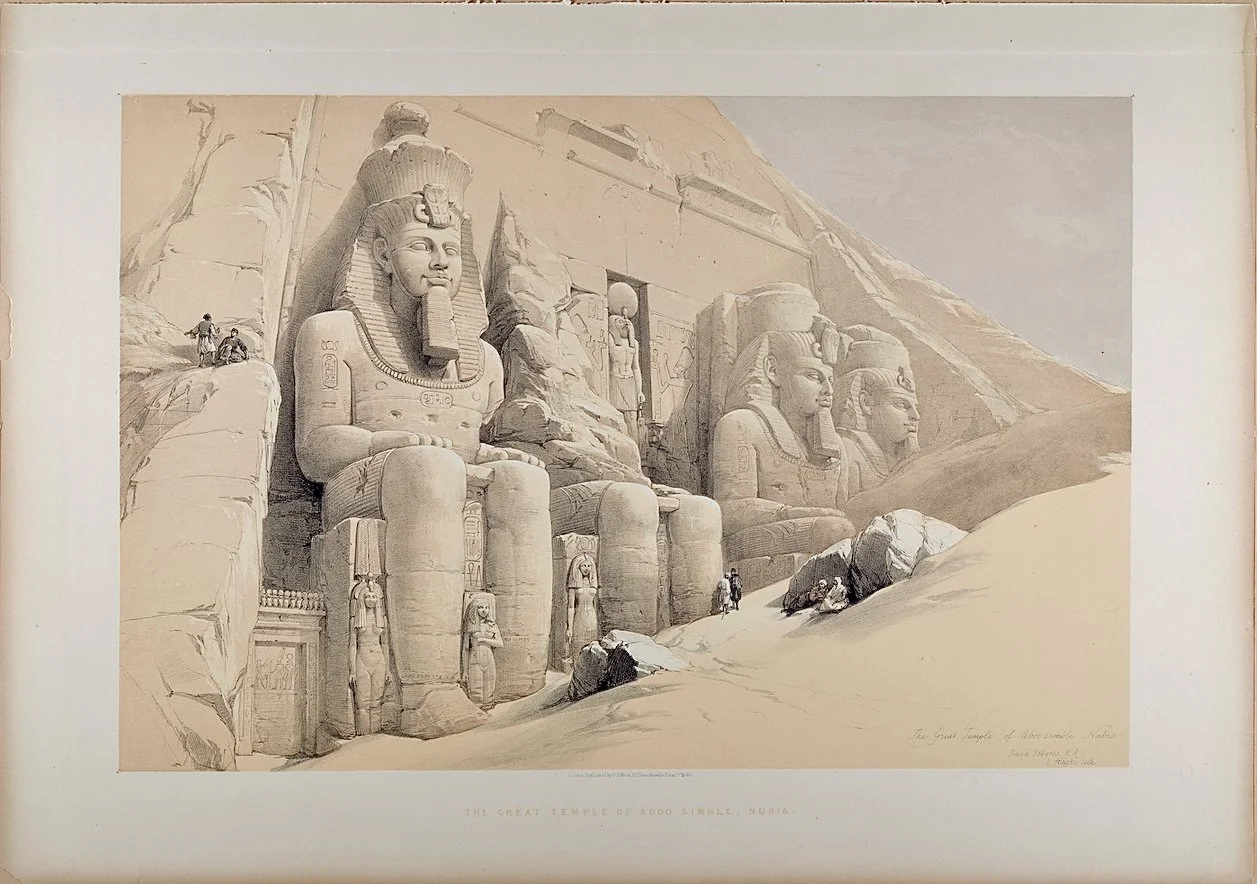
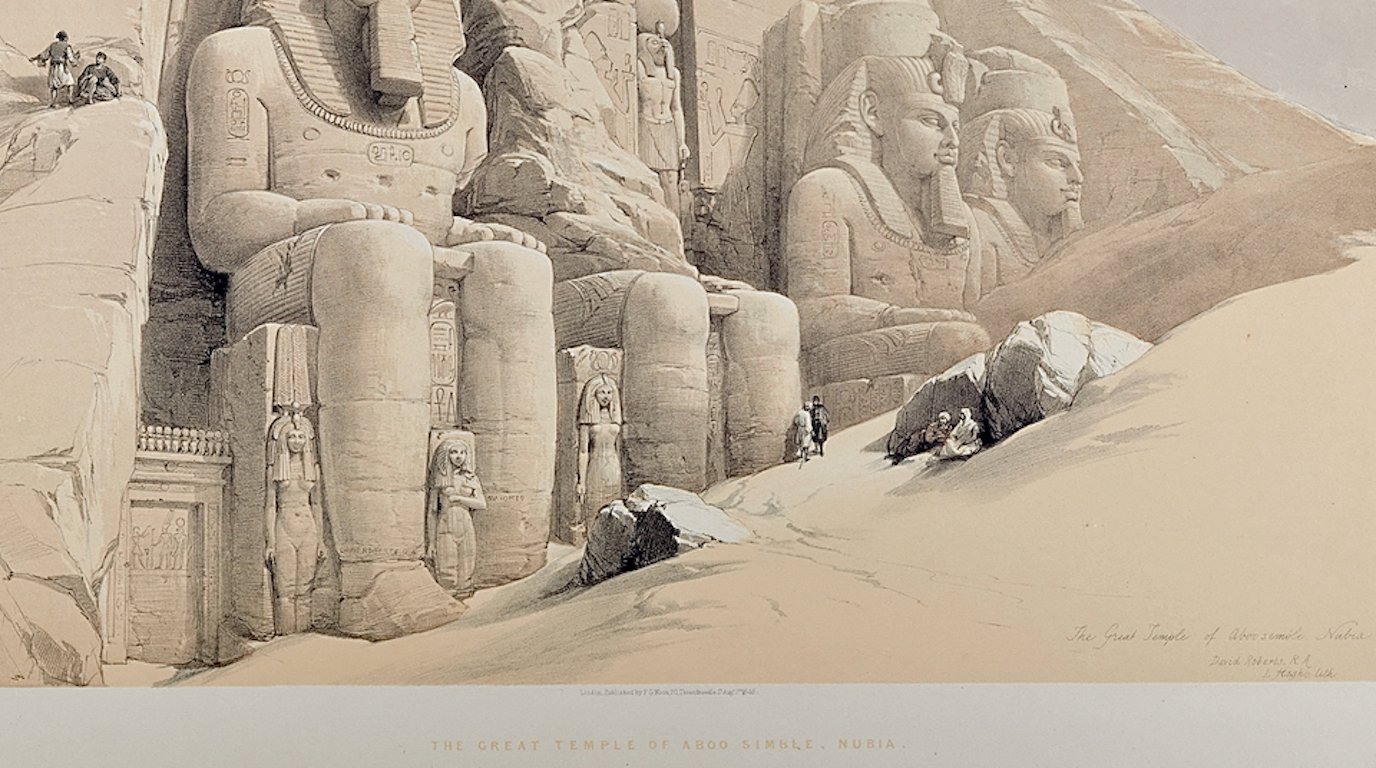
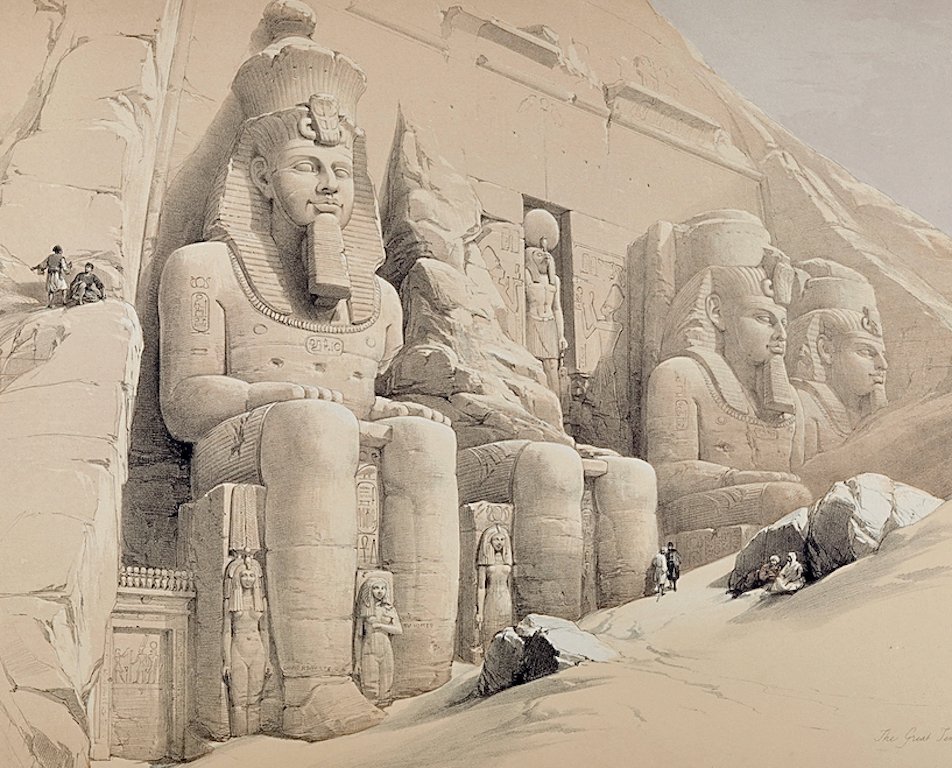
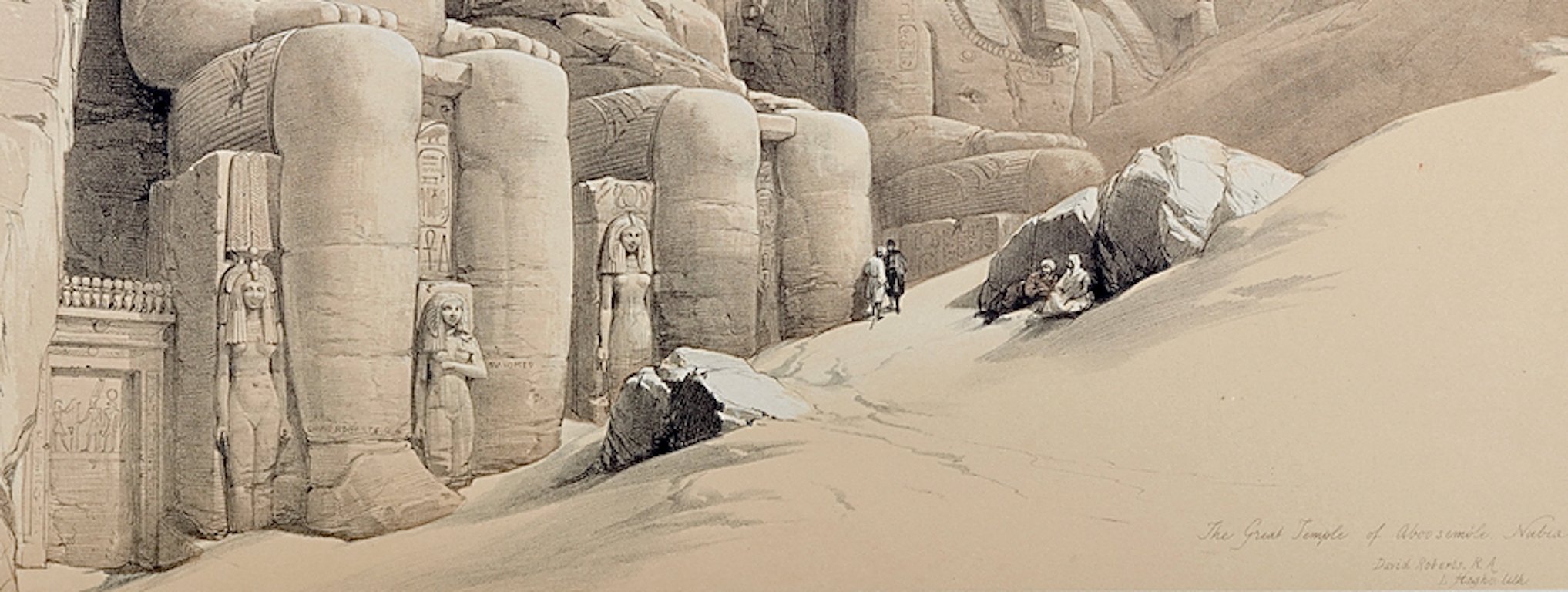
This duotone lithograph is printed on a sheet with wide margins. Overall the sheet measures 23.88" high and 16.75" wide. The print is signed in plate in the lower right and titled in the lower left. There is a tiny spot in the upper main and another in the lower portion of the right margin and a faint vertical crease in the left margin. None of this would be visible behind a mat at framing. The image is in excellent condition.
The drawings and watercolors from Roberts' tour of the Holy Land and Egypt were collated together into folios and released over a seven year period by the publisher F.G. Moon from 20 Threadneedle Street London. This lithograph is from the Royal Subscription Edition (1842-1849) with only 500 copies produced per depiction. Louis Haghe (the Belgian engraver and friend of Roberts) worked on all of the lithographs for this series.
David Roberts (1796-1864) was born outside of Edinburgh, Scotland. At age 10 he became a house painter’s apprentice. He continued painting houses and eventually theater scenes in Edinburgh and then in London. His friend, J. M. W. Turner, recognized his artistic talent and encouraged him to become a full-time artist.
In 1839 Roberts traveled to Egypt and then in 1840, through the Holy Land, concluding in Jerusalem. Upon his return to England, F. G. Moon agreed to publish lithographs created by Louis Haghe from Robert’s sketches and watercolors. This publication was highly acclaimed and very popular for its esthetic quality, its historical and topographical accuracy, and Robert’s dramatic depiction of his scenes. Queen Victoria and Charles Dickens were among the subscribers who collected his works. Roberts' and Haghe’s duotone lithographs, often colored, remain extremely sought-after today and have been rising steadily in value.